Leeward

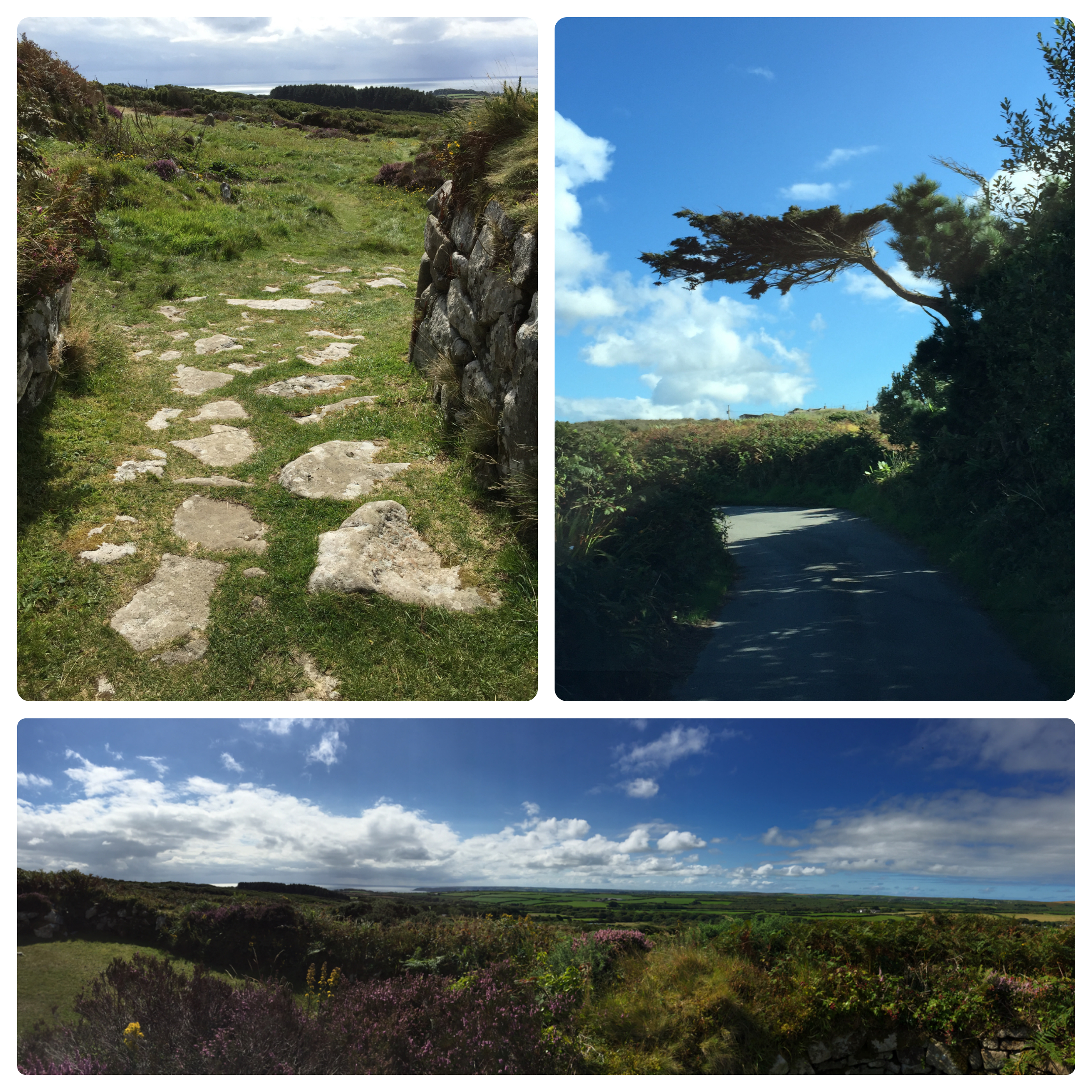
They stripped the trees for fuel those men
For warmth against the whipping, sand-armed winds
Brine-filled, little could grow above a sapling
Yet still they cleared, cut, split
Oblivious to their future
Straight poles for the roof and rafters
Turf topped, thick walled, their beast lived with them
They traded in copper and tin along superhighways
Westward, today we feel remote
Galleys of the Med; longships from the north
Curragh to their cousins in Ennor, over vicious seas.
What of them today?
Their village, long abandoned, leaves only mysteries
The sea is higher now, the wind blows colder
Where they saw land, we see rocky stumps
Where they saw crops, we see gorse
Where they saw hills, we see tors
Where they saw woods, we see a single tree
Combed over, brushed across,
Stunted windward, flared leeward
Shaped by forces aeolian, clues to their passing

Leeward

Dark Oktas

dark night sky_Fotor

None for a Summer sky, celestially glimmering, lavender, rich with sound
One for the arc of night, moon-lit, a promise of midnight rain
Two for her smudge-lined sketch, high, over a Play School house
Three for an April storm; fast-racing, surging, drench-me-quick
Four for Autumn morn, back lit, burnt umber and red
Five for urban up-rising, flat bottomed, threatening yet bright
Six for the Hammer God, chimney stacked, brooding, looming
Seven for Winter’s warning, a herald, on the very edge
Eight for the blanket, dark as eve, doom-laden, smothering

A whisper through leaves

There she is again; the voice, dulcet, soft
half-sung, semi-distant
audible, but faint; clear, yet indistinguishable
a whisper to me, gently, skin to skin
lip to ear, touching
a caress, sonic, wave forms that reach out, unseen
and come to shore with the riffle
of brine water over beach stone
or morning breeze through beech leaves
an echo, of past lives and what will become

The greenhouse

A few years back, I regularly flew to Amsterdam. From the Midlands there are two routes; from Birmingham, the planes track a thin scar, a line of running stitch above the M1, the M25, to the reflective meanders of the lower Thames estuary; or, from the East Midlands, heading out east, over first the Wash then the Waveney and down the Suffolk Coast, the glinting wind farms hover like mayfly above the surface of North Sea. Even from up high, you can see the silvery wakes of fishing boats. The glasshouses in the Fens glimmer and sparkle from up there too, more so as you descend down over the lowland, dune-ridden coast of Zuid Holland, over Zandvoord, Haarlem and Hoofddorp – there’s a stretch, just inland where the knobbly, tussocky grass gives way to endless glass. And my mind would always be filled with images of off-red under ripe winter Tomatoes, slightly grainy, crunchy even, courtesy of the assiduous Dutch.

Round here is much more mixed. Rolling land, fertile soils, here clay with beautiful cobbles where the land was once river, there dark loam, thick with centuries of leaf mould and ancestries of worms. About now we have swathes of oil seed rape, bright and pungent, but also stands of wheat that ripple in the breeze languorously, and dairy too – we’re not in the Netherlands, but you wouldn’t know it from the immigrant Friesians that plod and chew through these pastures. And despite ever more land given over to the floating trays of hydroponic strawberries, it’s definitely not greenhouse country. Most round here are like the one down on the village sports club. A semicircular structure, taught plastic film, not glass, that vibrates and buzzes when the wind blows just so, cost effectively constructed, hidden away in a corner. That greenhouse has yellowed with age, been patched or left, long grass grown around its feet like sock elastic gone limp. I assumed it was unused, unloved. Any radishes or carrots emerging from here would be leggy and odd shaped, surely?

IMG_3938But as I cut through the nettled footpath that brushes alongside it the other day, there were muffled grunts, chorused rumbles of gruff bass-voiced men and sudden sparks of shouting. A crime? A bizarre initiation? Stranger, a little further on there is a jerry-rigged frame of scaffold, wire and rope. I’d often wondered what it was – not industrial enough for an oil drill, too old for the frackers. Now, there was a thickly twined rope straining at a shabby concrete weight, lumps taken from the edges like a conglomerate loving dachshund.

The greenhouse in fact is nothing of the sort: it turns out that it is a rain cover. Underneath, a team of men, straining on a rope. “Keep it low” “Hold and heeeeave!”, pulling, lifting the weight, smoothly, in lengths of well-drilled backward stride. Here, in a curious circularity is the home of the coincidentally named Holland Tug of War Club. And this rather tatty greenhouse in the corner of a field is the training patch of the UK Outdoor Champions, not the vegetable patch of beetroot or lettuce.

It snows cherry blossom

There’s an ash tree in our garden
An adolescent, flushed with attitude of youth
It shoots out and shoots up
Not needles but keys, that dangle lank
Copious and voluminous, like a fertile vine
Come Autumn, when the wind whips and swirls
The air fills with the parachuting medals of
Maple and sycamore, spiraling, twirling
Their Viennese waltz, dizzily round
The ash keys, are more direct, a tango perhaps
Keen, forthright, intense, they snap and fall
They fill the drains; block downspouts
Yet are pretty for it just the same
None though, lights me up as the way
Cherry Blossom illuminates the Spring
White, like icing flowers or a touch of silver mascara
On a smoky eye, it rises like dust, glinting in the early light
that spears down from above
and then settles slowly, like Spring snow
or my love’s caressing hand upon my knee

Drop bolt

A friend, who at University attempted to teach me the guitar, developed a career first as a pharmaceutical rep then latterly as consultant in the same industry. Next thing I knew, he had given up schmoozing doctors and pitching new asthma drugs. “I’m training to be a blacksmith”, he told me. The furnace, the bellows, the ironstone, his calling.

In Alan Garner’s ‘Stone Book Quartet’, Robert is an illegitimate child being brought up by his grand mother (or Granny Reardun in Cheshire dialect, the name of this book of the four). Whilst napping stone for a wall with his stonemason grandfather, he realises he doesn’t have the skills to follow him; skiving off his last day at school he asks the local smith to ‘prentice him, so he can ‘get aback’ of his grandfather (aback: a generational improvement, to have a purpose in life through work). He becomes a smith: the smith makes the mason’s tools; makes the weathercock on the church or the arms on the Chapel clock.

Just over the road from us a bridlepath heads out across the fields. A two part, five bar gate marks its start. There’s a chain loop over the top to hold the small gate in place and a hand made drop bolt to keep the main gate firmly held. That big gate was half a century old at least, but it finally succumbed to rot over the Winter. It had been leaning like a drunk for months before that. The new gate is now in place but the old drop bolt is still there, 50 years more use to come, the handywork of a ‘smith unknown.

IMG_3916

The grass between my toes

IMG_3900

Today I stirred through the stone clad streets of our city
bear footed, thick soled, I padded
purposefully, confidently, cautiously, at times
but always feeling the ground beneath
the gravel, sharp and rootless, biting
and shifting underfoot

setts, crackle edged, deep-recessed, northern-rooted
smooth tarmac, warm, swarthy, vibrating gently
with an imminent car or bike
Hopping up a kerb, I scuttled into
a steeplechaser, bounding, leaping
my course the potholes or unseasonal puddles

But for all this I want to feel the grass
between my toes, it’s sword shard edges
breaking swards to release the smell
of first-cut lawns in Spring
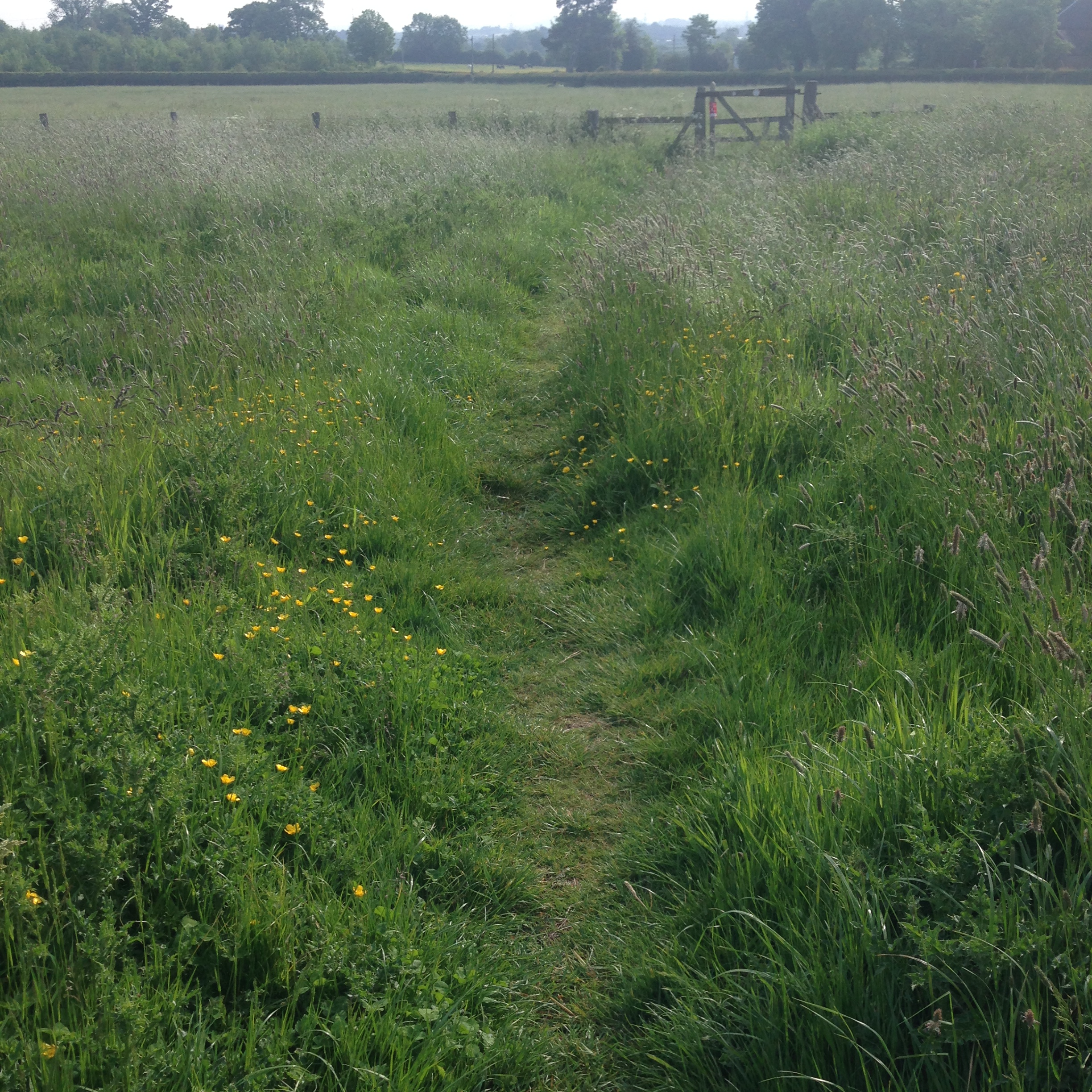
a snaking path through oxeye daisies, buttercups
shining nettles best avoided are there all the same
spurring me on through that way
with the grass beneath my toes

Death to the Green Space

Within 2.5 miles of our house, in just one direction in fact, the green belt is disappearing at an alarming rate. Developers and the local council are taking three bites. The first is ribbon development, a half mile wide strip between the dual carriageway and the river. “It was only a matter of time”, I heard someone say in apologetic justification, given the proximity to “a major arterial pathway”. Well that dual carriageway is built on a Roman Road: it’s managed without ‘light industrial units’ for two millennia, it can manage a bit longer. But no. The second bite is more tragic. The greenest of greenbelts; strings of old hawthorn hedges peppered with nests, before the Spring you can see them like currants in a bun rolled like an éclair. And lovely, misshapen old trees – all deciduous, 150, 200 years in the main by the look of them, twisted and leggy and all the more beautiful for it. The buzzards love them, crows too: the whole place cackles with sound on crisp Summer mornings. But no. They’ll be grubbed up – and no doubt replaced with juvenile cherries and rowan as a sop to ‘The National Forest’ sympathies hereabouts. The third. Well, that’s on “The Marina” (old gravel pit, connected to the canal via a short cut). I mean, St Trop it ain’t, and there may be sand banked here but it’s no Sandbanks. It also happens to be green belt – a term – a status – so redundant, so meaningless now it might as well be formally retired. The site is a quarter of mile from the river, parallel to the dual carriageway, yet it is deemed ideal for ‘starter homes’. And now the repugnant alliance of turncoat land owner and sebaceous housing developer want to ‘consult’ with us, so that we, ‘the community’, can ‘determine the character of their development’. So that’s alright then. No.

The issue here is the innocuous term, ‘green space’. A euphemism, a weasel word, the writer-illusionist’s sleight of hand. It parcels and chunks, portions and cuts up our land as an object to be traded – bit one imbued with naturality. Yes, we will build on this green space, but fear not, we will provide another green space in its stead.

But this land isn’t a tradable commodity. It is living memory, imbued with the marks of the past.  Build on one, clothe it in concrete and it has gone. Another will not replace it. And this land is home to the other inhabitants of our world. Those without a voice.   They don’t know what a green space is. All they know is that the apes have ripped up my home, grubbed up my nest and burnt it on a pyre. All they see is a concrete desert devoid of food, of sites, raped of the necessities for existence. They don’t get a voice in the consultation.

The myth of our ‘housing crisis’, our push for new homes on virgin land, the greed of the new landed gentry will have an untold cost. For the truth is, once the green space is gone, it can never be green again.

Cairn toppers

Up in the Fells, there are hidden corners where the touch of man sweeps back millennia: a flint axe mass-production factory treacherously perched high amongst scree slopes; stone circles, once remote, now implausibly close to a dual carriageway; droving paths through high, wind-buffeted cols, the top soil swept clean, cobbles and clasts exposed, bleached white against acid black peat cliffs.

Now that the hills are mainly a playground not a workplace, it is feet that denude the old ways, scuffing away thin soils, skittering grit and pebbles down in unseen avalanches, deadly to insects, exposing the bedrock, gritty scars. The paths now snake all over, wriggling and twisting across the land. Yet, still nature claws many back and others still remain indistinct, swallowed by bog, slurped by mires. Elsewhere, clear routes, short only of cats-eyes and white lines, suddenly disappear, like a cul-de-sac, or a bridleway near Dunwich, lost to the land, soaked back in, like litmus. And all paths become indistinct in the frequent mists that ride in from the sea, presaged by whipping winds heralding their ride, or the low clouds, sneakier, that whisper round outcrops and smother the senses, magnets held to internal compasses.

One rock, then the next, then another. This way the cairns arose, by calloused hands mysterious. A fourth, fifth, many more. Primitive pyramids, with no hidden secrets, no golden triangles or intersections of ley lines. No way-marks to the Holy Grail, just heaps of rocks, for navigation.

But it is their profusion that is remarkable, and their beauty. There is no classification, but perhaps one should be attempted. First, there are the wayside markers, 50 rocks, 60 perhaps, in loose, unkempt huddles to the side of the path, rarely retaining their form but slipping like an aged bosom. Little care is given them, but they are the most useful perhaps, illuminating paths lost to the dark of fell-walking befuddlement. And they are everywhere: with heartbeat regularity on long, yomping trails, more strategically placed on steeper rock step paths or scrambles; even, in miniature on exposed traverses, built by hardy head-cases intent on the shortest route to market.

The cols are home to the second sort; the fingerposts, the crossways. Markedly bigger, markedly taller but often ragged, they offer nothing more than a choice of route and are little celebrated. Some are embellished with old iron posts, impaled at assorted angles and oftentimes reburied with hags of peat, more rocks or old boots. They are the old men of the hills, tweed jacketed, teeth and fingers stained from years sucking on a jaunty pipe; hob-nailed boots, thick, green socks, passed down, darned, cussed. Wise though, to the ways of the hills.

IMG_3860Summits attract the acclaim, like a feather-winged moth incandescing in the heat of a naked flame. List tickers and fell baggers think little of them, but to us even-paced plodders they are often the highlight. Distinct from afar, they sharpen the peak, darken it too, give it a clear focus, pull the eye magnetically. They can be a distance marker too, when visible, but typically they conceal their reward until the final steps, slowly niggling into view, bit by bit, teasing. Some cairns are magnificent, built by the dry stone wallsmen, knapped and flush, bulging out from a sturdy base before sweeping into to a domed top, 8 foot up. Most are notable if only for their excess, a sick of stones, hurled on from all sides, splintered and forced into support of their neighbours. Their lichen and moss coats are unevenly worn, forced to readjust as the stones slip and yaw. So heavy, yet impermanent, gravity slowly pulls them to the valley floor.

That’s why I cairn-top. To reassert man’s dominion with the tools of nature. At first it was a mountain witticism, a fell joke. Now there is a more spiritual motive, a spiritual need. One stone, just one, added to the top of the cairn; more if it’s lunch time. Build it up, build it up; help weary travellers and lost souls find their way. Build it up, build it up.
I was here

That room in the bar evolves like the twisted beech outside its door; every year a silent alteration, change so gradual to be imperceptible. Foot high, the door’s stone threshold is whitewashed each Spring, only for studded boot soles to scuff it back by June. The flagged floor is hard grey, it’s natural round fractures rubbed clean by the sopping mop and the queuing feet of muddied, sweaty bodies above, scuffling, swapping aching foot to aching foot, the first pint and bag of scampi fries impatiently sought.

The bar, estate-painted and three quarters of a person high is topped by hand pumps hand polished by palms of valley men since before the war; the same brass, the same oak, but spruced up with the dainty neckerchiefs of local breweries’ beers, their trousers the sud-soaked bar towels, their coats a shield wielding their coat-of-arms. The fire though, wears its work clothes; an old cooker, blackened and cracked; a grate, made up with crisp packets and mossy logs.

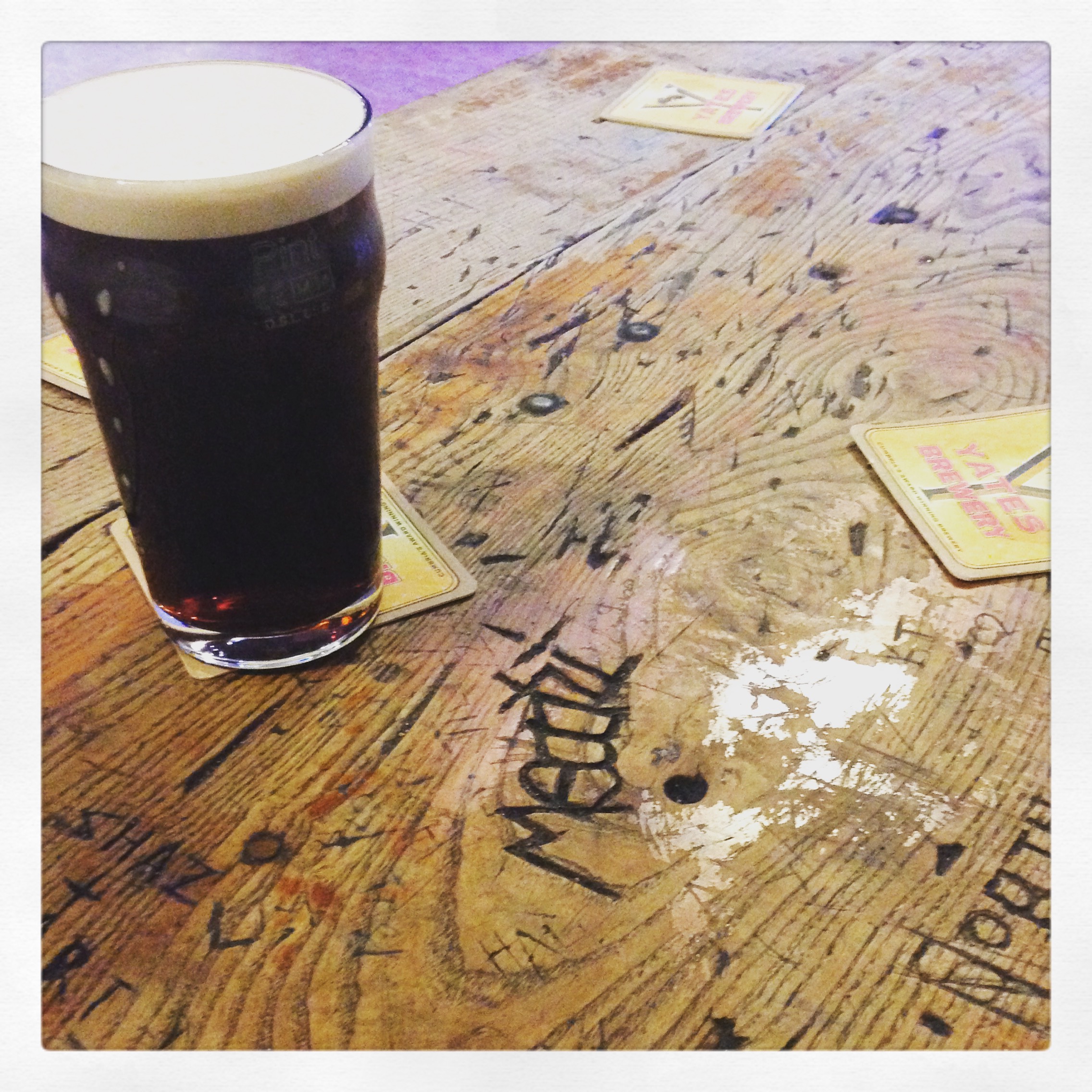
IMG_3863In the corner, a collage of memories from my under-canvas nights across the way. A bearded man, a sea dog far from the shores, playing a mandola, calling eyes closed to the Blackwater where his love was lost. Climbers, bejeweled with carabiners and pitons, sashes of lashed rope, eyes sparkling, talk jabbering, the fear of the overhang fading fast. Fell runners, salt crusted but laughing, mud and crud cementing their impossibly lithe limbs. All rest their pints on the old table, still here. Too small for plates but wide enough for two rounds. Planked, not true, legs as immobile as ever and the crack a touch wider now; but the marks are still there, scratched deep. Tattoos to time made with a knife tip not a needle: Tom; Mamut; Southman; Shaz and Bart. I drink my pint and leave no trace this time.

Back home there’s an old tree with characterful roots erupting through the pavement in twists and overlapping knots. Despite its age, it abounds with living vitality; the roots pushing up and out not down and across. Perhaps in a gust it will fall, a victim of its own vanity. Those roots have become a natural seat; school kids waiting to meet friends; an old timer resting his back; even those waiting in the queue for the Monday fish van. The bark, higher up gruff and rough is down here, polished and glossy. And the marks, scratched and scraped: Peter; MadJack; Fi; Marksman.

Maybe this is what it all boils down to. An old table in a valley pub; the bole of a tree poking above ground; petty vandalism or art; a sign to say “I was here”. A legacy of sorts.