Escargot Armageddon

The hosta, a North American native as I recall, thrives in our garden and I love them. Love them for the shapely, cup-handed leaves which gather the water, hold it and let it glisten in the light. Love them for the fecundity: the garden centre’s worse nightmare, a plant that doubles in volume each year, just split them and replant. Love them for their tolerance: light or shade, up they come, arms open to the world. I don’t know the varieties, but in our back door pots, we have a particularly lime green one, with variegated darker edges and a bright yellow hit of colour at the base on the inside. The hosta seems a perfect foil for us; on odd dark and gloomy Spring days, with broodingly malignant skies full of the potential of rain, they still shine as if powered by an inner luminescence.

In slug and snail world things are different. Whilst I may admire the architectural form, the stately leaves of the hosta, they look at them with a gourmand’s eye, only with out the critical faculties and food appreciation skills. Their cerebral cortex (I picture it as smaller and somewhat runnier than ours) lights up with synaptic chaos, like London viewed at night from the International Space Station “FOODFOODFOODFOOOOOODYUMYUMLETMEATIT” they yell, the blighters causing pandemonium. At first a scalloped edge; then a leaf chomped hungrily and before you know you weep into the curving dried brown stains of cold tea at the bottom of your cup as you survey the chewed stumps of your once prize blooms. Credit, it must be said, to the hostas for returning year after year.

But this would not do. It was time to take it to the mattresses. If need be, using a wretched mattress to camp out by the plants to catch the critters. To crush them. Destroy them. Smear them off the face of the earth. Without hurting them obviously. So the war starts in a phoney way. “We cannot harm the slugs. Let’s find a natural way ofmoving them on”.

Source: Pentax
Source: Pentax

Thus it was that I entered the world of slug removal research*: scouring the internet; raking up the wisdom of nearby horticulturalists; divining for family folklore. The creatively chemical ways that Homo Sapiens has developed to wreak Limaxocide on slugs and snails are devilishly endless, and will not be transcribed here – although some I’m sure will soon be banned by the EU. More ‘natural’ ways included scattering shells or fine gravel around the plant base; putting a small saucer of vinegar or beer nearby; crumble up a brillo pad or sneakily concealing small snips of copper wire in the vicinity (that’s why the trains have been delayed, I knew it).

I tried a few. None worked. The slugs are simply too numerous and the snails remarkably persistent for a creature devoid of speed. Instead, I am switching tactics; moving the slugs on (into the brown recycling bin – let them help the local council’s composting effort) and the snails, well – they don’t know it yet, but I am considering a farm, and to let the food cycle complete a full rotation.

* Sung to the words of The Cult’s ‘Love Removal Machine’
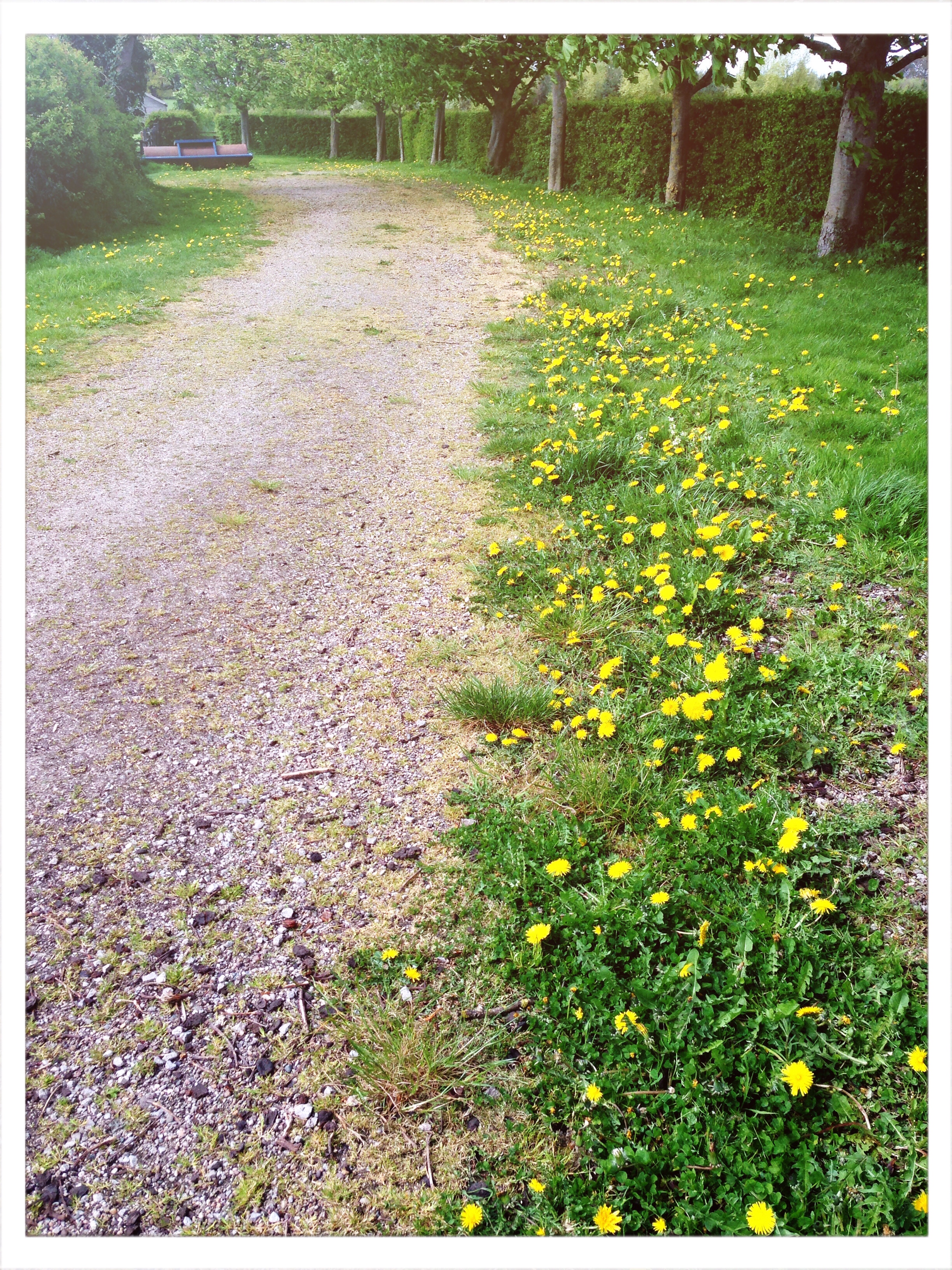
A galaxy of dandelions

I lurched into orbit today, dog-fueled
shoe-mounted thruster rockets,
propelled my aching body up the path,
a big, squat Space Shuttle.

The cosmological riot of colour reached out,
panchromatic, a spectrum, corona,
blinking and winking at me,
enveloping me.

Space it seems has dropped to earth
lying like an ethereal blanket over the waking Spring fields
a constellation of dandelions dot this sky;
stars stretching off light years away,
even beyond the old wood (out Andromeda way)

A nebula of docks, their leaves curving through space,
bullying through the long grass, bent awkwardly
pushing against the foot of the cows’ steading.
With little rain, the paths are dusty, diaphanous
Asteroid Belt footpaths viewed through the telescope of my eyes.

And the sheep droppings, the damn
damn sheep droppings
bring me back to earth
but above, our own White Dwarf, massive, relentlessly beats
its drumroll of cold May heat.

IMG_3655

Four manatee

I feel at home on the water although my experience is limited: it’s a dangerous combination: a sea dog without the sea legs. But not today, fortunately. The weather was hot; with a lulling, lilting breeze off the sea rippling the surface of the gulf we were kayaking in. The rhythmic roll and pull of the paddle; the water slapping the hull; a small wake behind: the hours disappeared without a breath.

We made our way around low mangrove islands; their tendril roots hanging down like wizard’s boney fingers; spider crabs infesting them, scrambling up the roots to overhead branches, scrabbling, running, hanging; eyes on stalks peeking at you as we passed below their woodland home.  Urbanisations of oysters shells on the water line; popping and cracking with the movement of the tides and the flushing of the bath-warm water through them, like a forest fire catching, the distant sound of flames. A heron; stark white; black mascaraed eyes, standing in a shadowed break in the stream; the perfect spot, above the shallows. He eyes us briefly but his gaze is elsewhere, in the green waters below him, the plants fanning lazily, hermit crabs unfurling; and then; a recoiled neck, a spearing dart and a fish in his beak shaking. He shakes too, his neck quivers, gulping the fish down. Then the cycle starts again.  In the shallows outside the tunnel, grey mullet in shoals scitter randomly; needlefish spearing through the water with purpose; above ospreys pipe and watch what we watch but with different intent.

As we head for home a curving green arc in the water and a snout; a blow and a small plume of water.   Urgent calls; at first, it looks like a seal, but no; the broad, boxy snout is the give away: a sea cow, a manatee – at first, a pair we think, as two heads rise together entwined. We lightly turn our boats to follow them, and realise there are four, hoovering the sea grasses and rich silts under the shallow bay; arching their backs to dive; returning to the surface to idly chew and breathe. Their movements in slow-mo, considered, unhurried: their focus, feeding.  Not meaning to scare we keep our distance; but after brief curiosity, the manatees ignore us and at one point pass below our boat; cormorants hoping for stray fish follow them brushing our hull.

Manatee_fotor

Tall chimneys

The part of the world I’m originally from is known for its black and white (or ‘Magpie’, funnily enough) buildings. Crooked oak posts, cruck or ‘A’ frames, intricate carving counterpoised against rugged adse-hewn joints. The timbers are paint blackened, countless coats over hundreds of years, with jettied floors ideal for jettisoning night soil. The infill though is far from soiled, it is whitewashed, brightly pronounced even when a new splash is needed. But despite being seemingly too stark for a countryside setting, somehow the opposite becomes true, they fit into their surroundings, dig in, natural, at one. For me, though, it’s not the body of these vernacular buildings that I enjoy most, it’s the head, the hat. The chimneys weave and wind, often the chimney breast is concealed inside the house and the stacks suddenly erupt in swirls and twists.

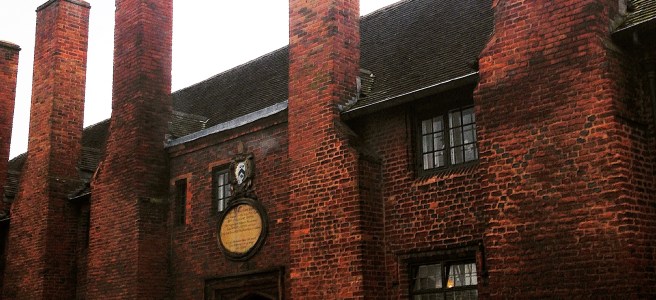
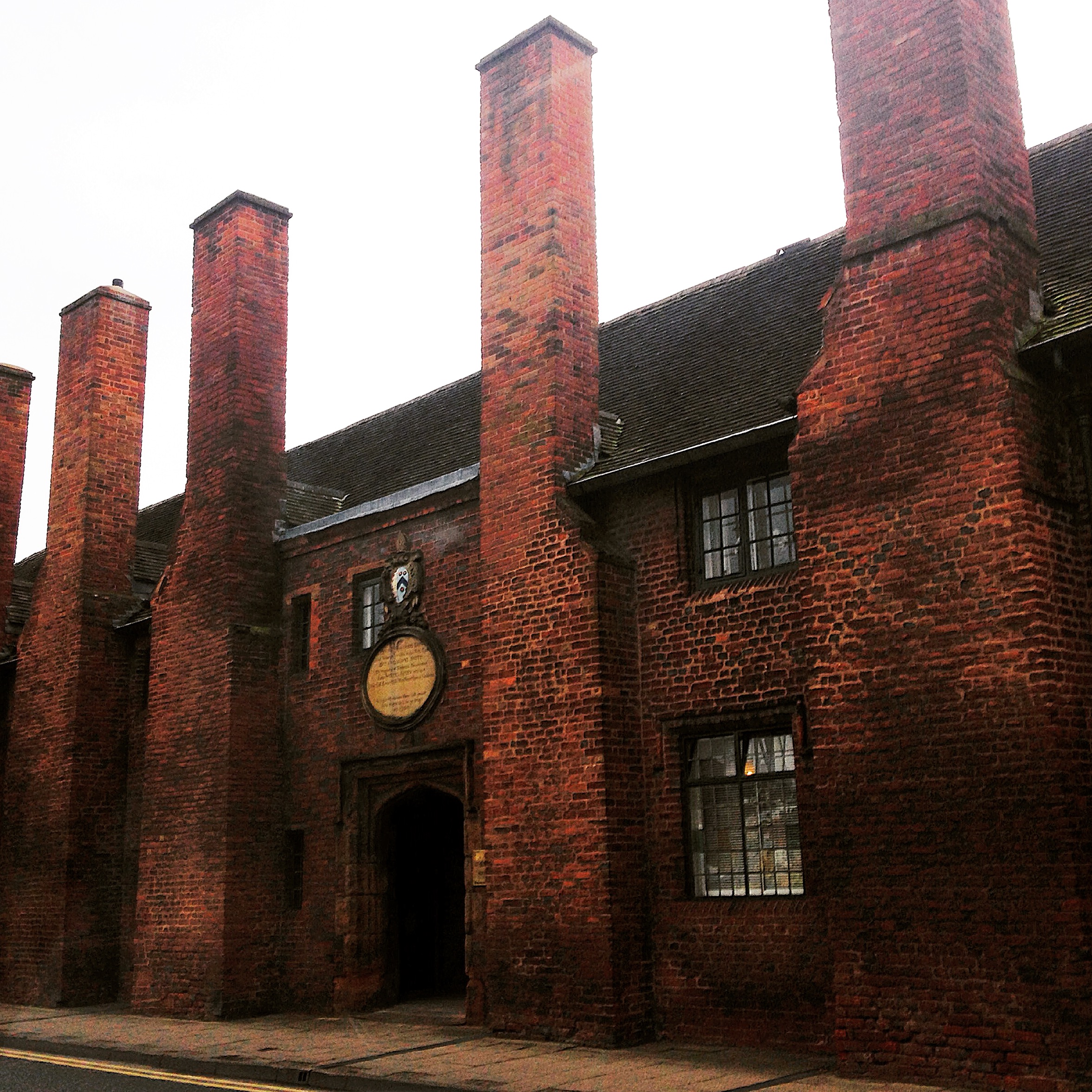
IMG_3303Travelling south and east though into the Midlands, the black and white houses ebb away. Timber buildings are still here, but the timber is usually left alone, or more typically hidden by the façade, brick or otherwise. And the chimneys too seem less grand. Maybe us Cheshire folk have always been a bit showy, but these Staffordshire chimneys are straight, honest, workmanlike. Maybe they just put their money into the parts of the house they could see when reading a book. But then you get a surprise: stuck in traffic in the old Cathedral city of Lichfield a few days ago, I see these beauties on the old hospital of St John (no Knights Templar as far as I could see but there probably is a connection). A row of tall chimneys rising from the pavement up. Not an afterthought, but so essential to the buildings, they seem almost like an enceinte, a castle wall, a fortification, a warning. Proudly vertical then, reaching up towards the clouds, but in such profusion that they have a strong horizontality  too, strengthening the roof line, the line of the lintels and leading the eye along and away.

Reeds

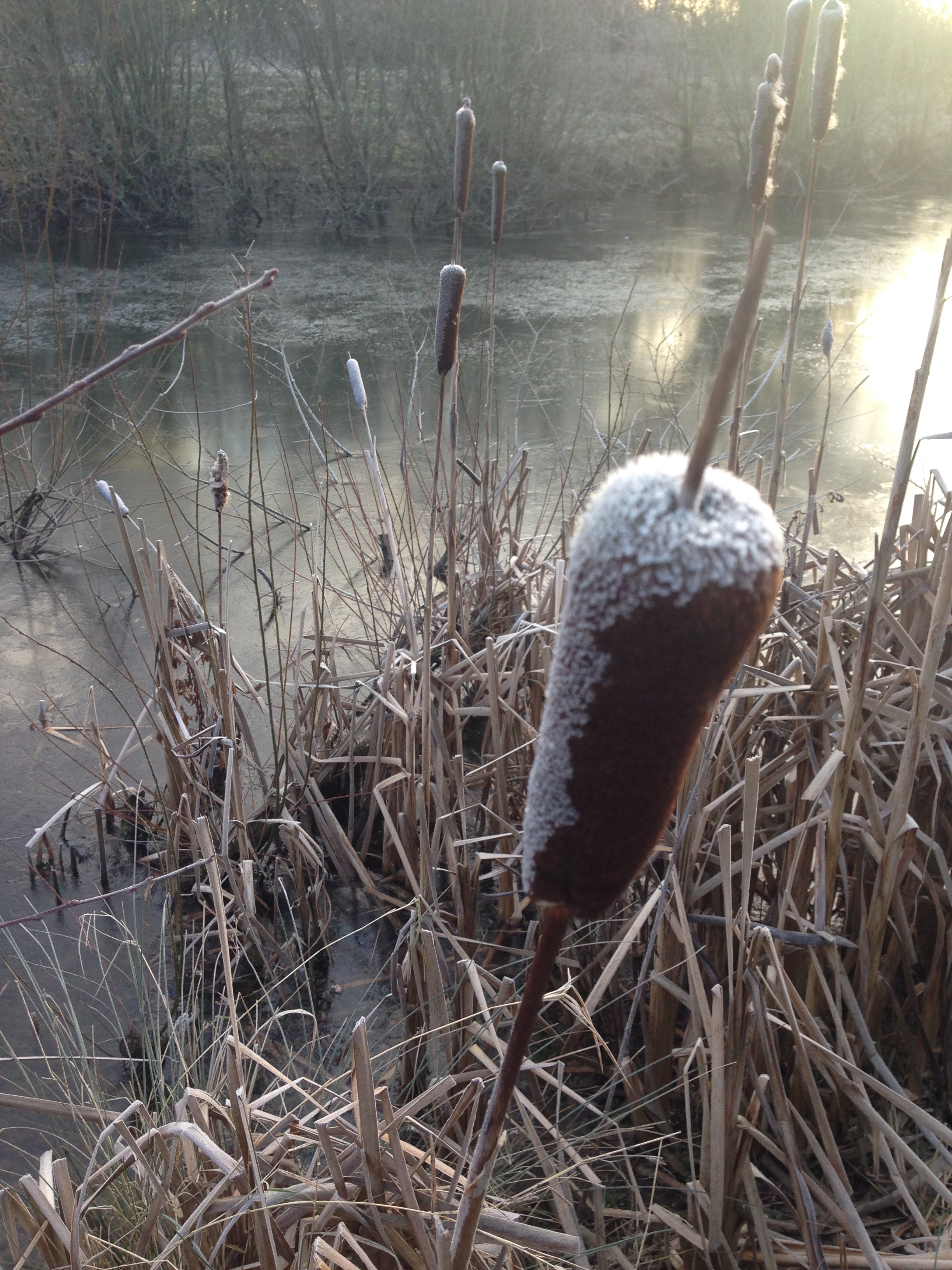
IMG_3029At the edge of the lake I look over the reed beds. It’s a chill morning but a Spring chill not a Winter one; in the shadows it’s bitter cold; step out into the light, into the low light of this post dawn sun and it’s immediately warming. The reeds display the position of our orbit as well as anything, like back brushes sticking up, icy suds on one side, clean on the other. Funny how things come full circle. Man reclaimed land from the marsh, but today he digs out the gravel and re-floods the pits left. The reeds, in turn, object – pushing out again with slender roots; reclaiming the land from the water once more.

Low landings

Low LandingsThe stretch of Cheshire arcing round the south of Manchester is pilloried by Jeremy Clarkson and widely known as ‘The Home Counties of the North’ due to its relative wealth and attractiveness to Premier League footballers. It’s true, there is a high preponderance of gold sandals in Wilmslow, to match the faux golden skin tones. But stereotypes hide more than they reveal and this is a beautiful part of the world; verdant; low but rolling; steep wooded river banks and great views up towards the Pennines and down across the Plain from places such as Alderley Edge, Shutlingsloe or further south, the Cloud. Knutsford is the epicentre; socio-demographic markers reveal all: a Booths Store, a Bentley dealership an outpost of Clive Christian kitchens. There’s also a lovely old restaurant call The Belle Epoque, mid way down the main street.

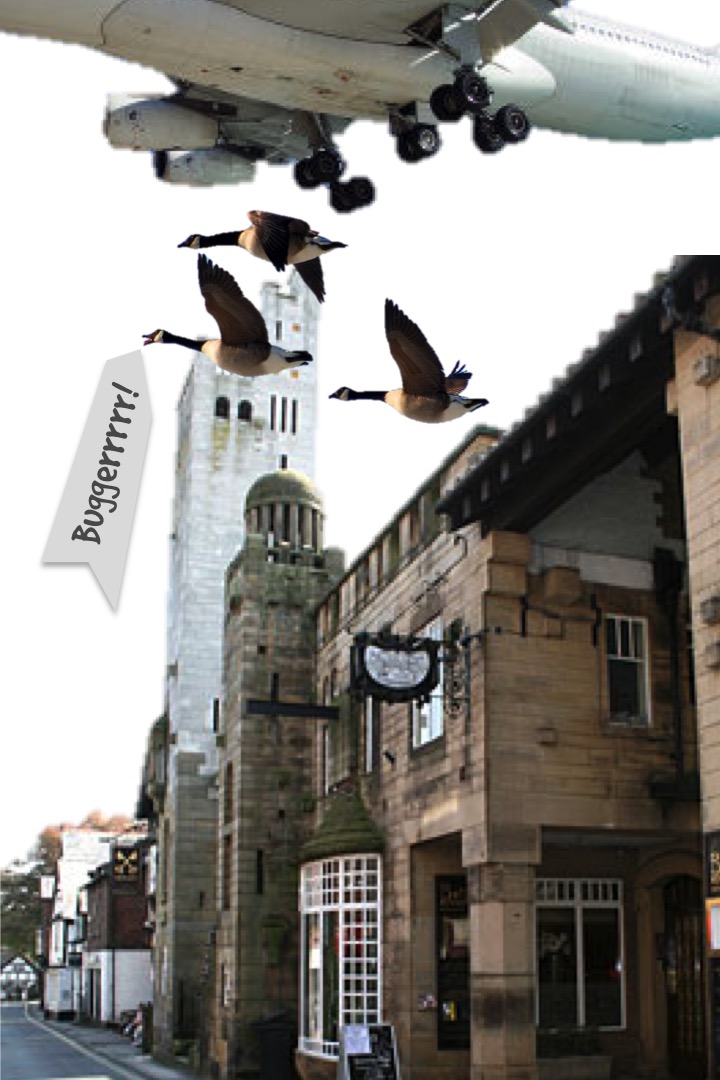
Last time I was there we parked up near the restaurant and as we did, there was an encroaching rumble and an accompanying whine of an aero engine decelerating. In it swept – just yards above the Epoque’s elaborate roofline. Flybe I noted, close enough to wave to the pilot. Turns out that Manchester’s newish runway is the culprit; at least that and the wind blowing in a certain direction. Knutsford property values don’t seem to have suffered too much and the well heeled gaggle of Sauvignon Blanc drinkers outside Loch Fyne didn’t seem bothered either, but it was shock all the same.

Just last week it struck me how so many things we do mimic nature. The road from the east into our village comes in over what will soon be a causeway between man made gravel extraction lakes. The developers stock promise: ‘new habitats will be created’, whilst failing to mention the old habitats that will be destroyed. And already the changes are happening: now the air above the road is like the sky above Knutsford, only with nature’s planes. Waterfowl, and Canada Geese in particular using the route as their best line of descent onto the lake. Noisy buggers they are, honking their air traffic control messages to one another, feathering their wing flaps just as our planes do. Bounced and bashed by turbulence on the way in, their low landings are equally bumpy, even onto water.

Fleeting fossils

IMG_3031The other evening we chatted about removing the fleecy jackets that cosset the delicate plants around our garden. In pots mainly, our fragile ones, prima donnas with slender leaf tips poking through, giggling, a royal wave. There’s a racy fatsia japonica in particular, who just has to stick her seven fingered limbs out from under her kimono, a shapely thigh revealed through a high-slitted skirt. But the threat of frost has not passed and Her Kimononess gets gently ushered back in. Good thing too; this morning we had a real nippy belter, with those interlocking palmate leaves of ice fronding together across our windscreen and a crackly hoar frost on the fence, sharp to touch, Christmas trees in miniature; and a stillness all around – the birds wise to warmth, the worms unable to break through, feeding time delayed.

The best morning for a walk these: the dog hares off, with no fear of a Blacker Shade of Dark and similar ditties, and the boots, well, the crunch. It may not be golden, but it certainly is delicious, cracking through frozen puddles, scuffling off the icy crowns on the grass with a deft side foot out to the left wing. Leaves hang lower under the weight of the ice and the white hawthorn blossom, which is coming out round here, shimmers mesmerically under its coat of cold. But the best of it all are the footprints. Down near the gate, in the lee of the rosehip hedge, cancer ridden with brambles, no light can get through and it’s properly cold there. It’s something of a crossroads that bit – one path snaking down off the hill through the holloway as I call it, another skirts around the spring line, bisecting it.

And there are the footprints, boot marks, frozen. It brings to mind the fossilised tracks in the Great Rift Valley. Last night’s imprints, frozen fleetingly by the first frost, captured in a freeze-frame instant before the rising sun oozes them into history. Maybe there’s a parallel world where they exist in stone and academics get frothy and excited, little knowing they were formed only last night. Or perhaps there’s a different way of experiencing time, in slow motion. In that world, we are in the grip of an ice age and strange footprints have been discovered in the permafrost, experts arguing about their origins. An imprint of peoples’ lives all the same, captured momentarily then lost.

First swards

First swards_fotor

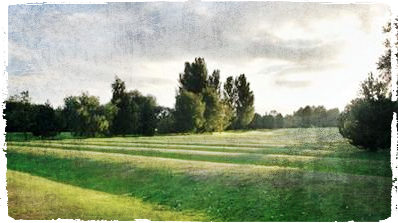
The first green stripes have appeared, verdant and plump, fluffed up like new pillows from the fizzing barber’s blades; rotary cutters in a cycle of snipping. Clipped edges, scraggily neat, on turf in truth to wet to cut, but it’s a signal all the same, a beacon, that Spring beckons like the first rays of morning light, optimism rising. There’s always one who breaks the seal of Winter first, pitching for a place as gardener of the year, eager to see that thick-pile carpet of grass, moss and daisies, one light, one dark, feathery foot marks following where gumboots amble behind. The real change though is in the air not on the ground. Gone, the crackling dry smells of sharp frosts, cracking wood under sheaves of leaf litter and curling morning mists. In, the rich smells like snapped daffodil stalks, of grass swards, their winter hair army-sheared, their sap freed to storm dark adenoids and wake up the green man within.

Over the city

IMG_3227_fotorIt had been a full twenty years by my reckoning, since my travels had brought me back. Graunching and echoing through the tunnels, on metal flanged wheels to Highgate, and a meeting nearby. The Tube track is deep underground here, a forgotten ruckus buried under the hill. Here in fact, the Northern line lies buried beneath a deep gully, hiding the station further, masking sight and sound. The ascent then is a long one from the platform to the road. The escalators assist the first pitch, before steel edged steps, their criss-cross treads polished almost to nothing from the daily sole erosion. Here, us troglodytes emerge from our cave mouth, eyes greedy for focus in the deep shadow-shafted light. The leaf mould and mulch lies heavy too; banked up behind iron railings and discarded coffee cups with their Tommy-Tippee lids. Scrunching and dry either side of the steps, the leaves whisper conspiratorially to one another as the final climb to the road, the peak. The topping out reward: a wall of wrestling sounds. The hacking smoker’s cough of a bus exhaust; the gasping whine of the release of pressure brakes. Up Archway Road and across to The Park, the noise gurgles away, only metres from the road, suppressed by elevation, pretty terraces and lines of London Planes. They lean into the road, craning for a better view. And what a view, out over the city. Endless: here, the red light on top of Canary Wharf; there, a distant tower block mirror glinting the sun; this way, a line of smearing red tail lights in the snail-slow jam up the hill, that way a meandering brook of houses undulates away down a hill, following the lie of the land. A fine place to build a city. A fine place to put a hill.

Ridge and furrow

ridge and furrow_fotorAfar, a thin lichen blotched steeple, knapsack brown with badges of green. Ahead, a blackthorn hedge cleaved near the root by billhook and determination; muscled over, sloping branches, silhouetted like nature’s tally-marks. Up close, the ridge and furrow: broad ridges, a yard across; furrows, a yard wide, and half that deep. Fixed in earth, these are fossilised waves, collecting the late afternoon winter sun, refracting light, creating vivid outlines. These waves do not crash or break, they billow only over the course of a lifetime. There is no wash or rip. Every seventh wave is the same not higher. The pull of the moon does not mould these ripples of turned and re-turned earth.   The sound of the oxen and Medieval plough still echoes here, casting ancient shadows.