Drop bolt

A friend, who at University attempted to teach me the guitar, developed a career first as a pharmaceutical rep then latterly as consultant in the same industry. Next thing I knew, he had given up schmoozing doctors and pitching new asthma drugs. “I’m training to be a blacksmith”, he told me. The furnace, the bellows, the ironstone, his calling.

In Alan Garner’s ‘Stone Book Quartet’, Robert is an illegitimate child being brought up by his grand mother (or Granny Reardun in Cheshire dialect, the name of this book of the four). Whilst napping stone for a wall with his stonemason grandfather, he realises he doesn’t have the skills to follow him; skiving off his last day at school he asks the local smith to ‘prentice him, so he can ‘get aback’ of his grandfather (aback: a generational improvement, to have a purpose in life through work). He becomes a smith: the smith makes the mason’s tools; makes the weathercock on the church or the arms on the Chapel clock.

Just over the road from us a bridlepath heads out across the fields. A two part, five bar gate marks its start. There’s a chain loop over the top to hold the small gate in place and a hand made drop bolt to keep the main gate firmly held. That big gate was half a century old at least, but it finally succumbed to rot over the Winter. It had been leaning like a drunk for months before that. The new gate is now in place but the old drop bolt is still there, 50 years more use to come, the handywork of a ‘smith unknown.

IMG_3916

The grass between my toes

IMG_3900

Today I stirred through the stone clad streets of our city
bear footed, thick soled, I padded
purposefully, confidently, cautiously, at times
but always feeling the ground beneath
the gravel, sharp and rootless, biting
and shifting underfoot

setts, crackle edged, deep-recessed, northern-rooted
smooth tarmac, warm, swarthy, vibrating gently
with an imminent car or bike
Hopping up a kerb, I scuttled into
a steeplechaser, bounding, leaping
my course the potholes or unseasonal puddles

But for all this I want to feel the grass
between my toes, it’s sword shard edges
breaking swards to release the smell
of first-cut lawns in Spring
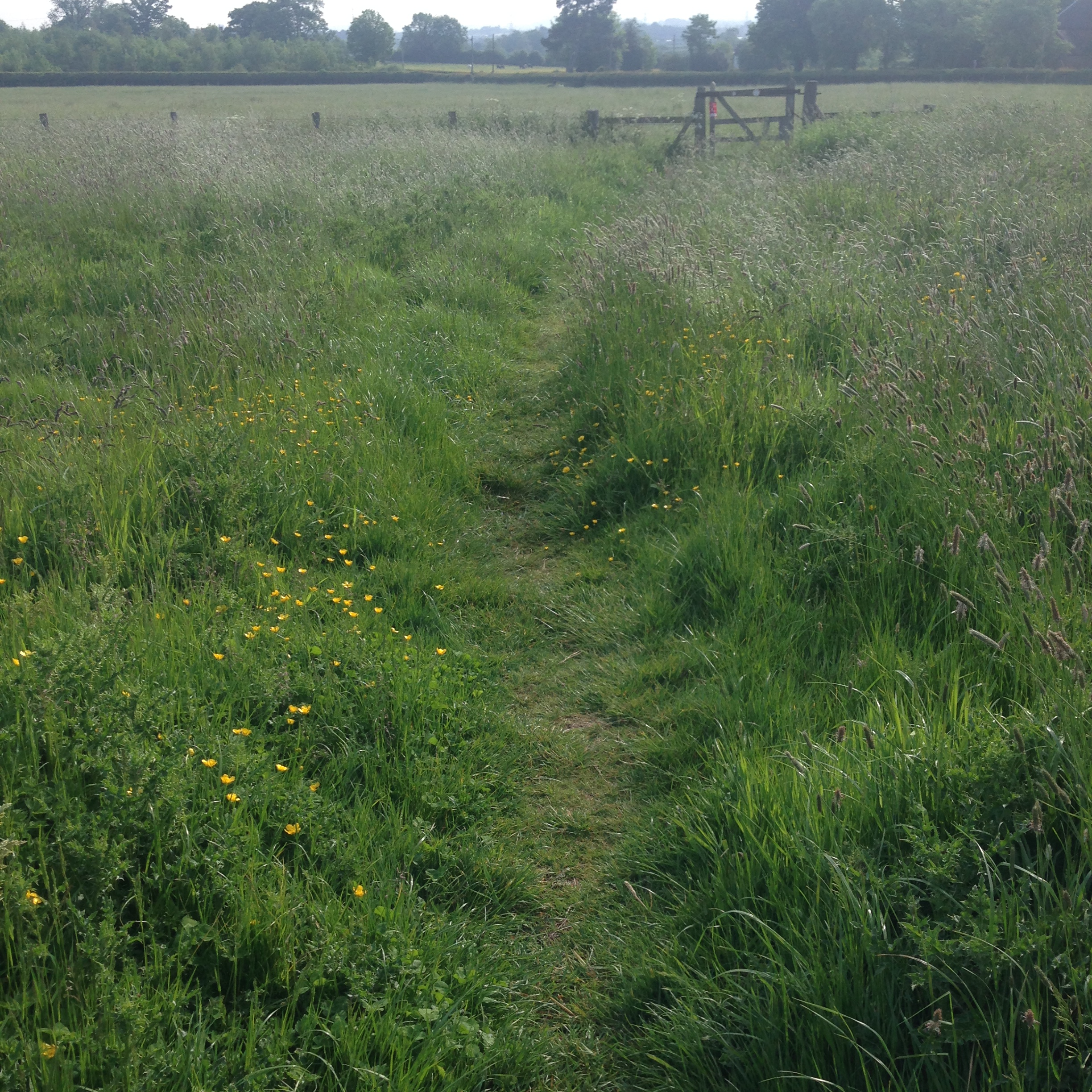
a snaking path through oxeye daisies, buttercups
shining nettles best avoided are there all the same
spurring me on through that way
with the grass beneath my toes

Death to the Green Space

Within 2.5 miles of our house, in just one direction in fact, the green belt is disappearing at an alarming rate. Developers and the local council are taking three bites. The first is ribbon development, a half mile wide strip between the dual carriageway and the river. “It was only a matter of time”, I heard someone say in apologetic justification, given the proximity to “a major arterial pathway”. Well that dual carriageway is built on a Roman Road: it’s managed without ‘light industrial units’ for two millennia, it can manage a bit longer. But no. The second bite is more tragic. The greenest of greenbelts; strings of old hawthorn hedges peppered with nests, before the Spring you can see them like currants in a bun rolled like an éclair. And lovely, misshapen old trees – all deciduous, 150, 200 years in the main by the look of them, twisted and leggy and all the more beautiful for it. The buzzards love them, crows too: the whole place cackles with sound on crisp Summer mornings. But no. They’ll be grubbed up – and no doubt replaced with juvenile cherries and rowan as a sop to ‘The National Forest’ sympathies hereabouts. The third. Well, that’s on “The Marina” (old gravel pit, connected to the canal via a short cut). I mean, St Trop it ain’t, and there may be sand banked here but it’s no Sandbanks. It also happens to be green belt – a term – a status – so redundant, so meaningless now it might as well be formally retired. The site is a quarter of mile from the river, parallel to the dual carriageway, yet it is deemed ideal for ‘starter homes’. And now the repugnant alliance of turncoat land owner and sebaceous housing developer want to ‘consult’ with us, so that we, ‘the community’, can ‘determine the character of their development’. So that’s alright then. No.

The issue here is the innocuous term, ‘green space’. A euphemism, a weasel word, the writer-illusionist’s sleight of hand. It parcels and chunks, portions and cuts up our land as an object to be traded – bit one imbued with naturality. Yes, we will build on this green space, but fear not, we will provide another green space in its stead.

But this land isn’t a tradable commodity. It is living memory, imbued with the marks of the past.  Build on one, clothe it in concrete and it has gone. Another will not replace it. And this land is home to the other inhabitants of our world. Those without a voice.   They don’t know what a green space is. All they know is that the apes have ripped up my home, grubbed up my nest and burnt it on a pyre. All they see is a concrete desert devoid of food, of sites, raped of the necessities for existence. They don’t get a voice in the consultation.

The myth of our ‘housing crisis’, our push for new homes on virgin land, the greed of the new landed gentry will have an untold cost. For the truth is, once the green space is gone, it can never be green again.

Cairn toppers

Up in the Fells, there are hidden corners where the touch of man sweeps back millennia: a flint axe mass-production factory treacherously perched high amongst scree slopes; stone circles, once remote, now implausibly close to a dual carriageway; droving paths through high, wind-buffeted cols, the top soil swept clean, cobbles and clasts exposed, bleached white against acid black peat cliffs.

Now that the hills are mainly a playground not a workplace, it is feet that denude the old ways, scuffing away thin soils, skittering grit and pebbles down in unseen avalanches, deadly to insects, exposing the bedrock, gritty scars. The paths now snake all over, wriggling and twisting across the land. Yet, still nature claws many back and others still remain indistinct, swallowed by bog, slurped by mires. Elsewhere, clear routes, short only of cats-eyes and white lines, suddenly disappear, like a cul-de-sac, or a bridleway near Dunwich, lost to the land, soaked back in, like litmus. And all paths become indistinct in the frequent mists that ride in from the sea, presaged by whipping winds heralding their ride, or the low clouds, sneakier, that whisper round outcrops and smother the senses, magnets held to internal compasses.

One rock, then the next, then another. This way the cairns arose, by calloused hands mysterious. A fourth, fifth, many more. Primitive pyramids, with no hidden secrets, no golden triangles or intersections of ley lines. No way-marks to the Holy Grail, just heaps of rocks, for navigation.

But it is their profusion that is remarkable, and their beauty. There is no classification, but perhaps one should be attempted. First, there are the wayside markers, 50 rocks, 60 perhaps, in loose, unkempt huddles to the side of the path, rarely retaining their form but slipping like an aged bosom. Little care is given them, but they are the most useful perhaps, illuminating paths lost to the dark of fell-walking befuddlement. And they are everywhere: with heartbeat regularity on long, yomping trails, more strategically placed on steeper rock step paths or scrambles; even, in miniature on exposed traverses, built by hardy head-cases intent on the shortest route to market.

The cols are home to the second sort; the fingerposts, the crossways. Markedly bigger, markedly taller but often ragged, they offer nothing more than a choice of route and are little celebrated. Some are embellished with old iron posts, impaled at assorted angles and oftentimes reburied with hags of peat, more rocks or old boots. They are the old men of the hills, tweed jacketed, teeth and fingers stained from years sucking on a jaunty pipe; hob-nailed boots, thick, green socks, passed down, darned, cussed. Wise though, to the ways of the hills.

IMG_3860Summits attract the acclaim, like a feather-winged moth incandescing in the heat of a naked flame. List tickers and fell baggers think little of them, but to us even-paced plodders they are often the highlight. Distinct from afar, they sharpen the peak, darken it too, give it a clear focus, pull the eye magnetically. They can be a distance marker too, when visible, but typically they conceal their reward until the final steps, slowly niggling into view, bit by bit, teasing. Some cairns are magnificent, built by the dry stone wallsmen, knapped and flush, bulging out from a sturdy base before sweeping into to a domed top, 8 foot up. Most are notable if only for their excess, a sick of stones, hurled on from all sides, splintered and forced into support of their neighbours. Their lichen and moss coats are unevenly worn, forced to readjust as the stones slip and yaw. So heavy, yet impermanent, gravity slowly pulls them to the valley floor.

That’s why I cairn-top. To reassert man’s dominion with the tools of nature. At first it was a mountain witticism, a fell joke. Now there is a more spiritual motive, a spiritual need. One stone, just one, added to the top of the cairn; more if it’s lunch time. Build it up, build it up; help weary travellers and lost souls find their way. Build it up, build it up.
I was here

That room in the bar evolves like the twisted beech outside its door; every year a silent alteration, change so gradual to be imperceptible. Foot high, the door’s stone threshold is whitewashed each Spring, only for studded boot soles to scuff it back by June. The flagged floor is hard grey, it’s natural round fractures rubbed clean by the sopping mop and the queuing feet of muddied, sweaty bodies above, scuffling, swapping aching foot to aching foot, the first pint and bag of scampi fries impatiently sought.

The bar, estate-painted and three quarters of a person high is topped by hand pumps hand polished by palms of valley men since before the war; the same brass, the same oak, but spruced up with the dainty neckerchiefs of local breweries’ beers, their trousers the sud-soaked bar towels, their coats a shield wielding their coat-of-arms. The fire though, wears its work clothes; an old cooker, blackened and cracked; a grate, made up with crisp packets and mossy logs.

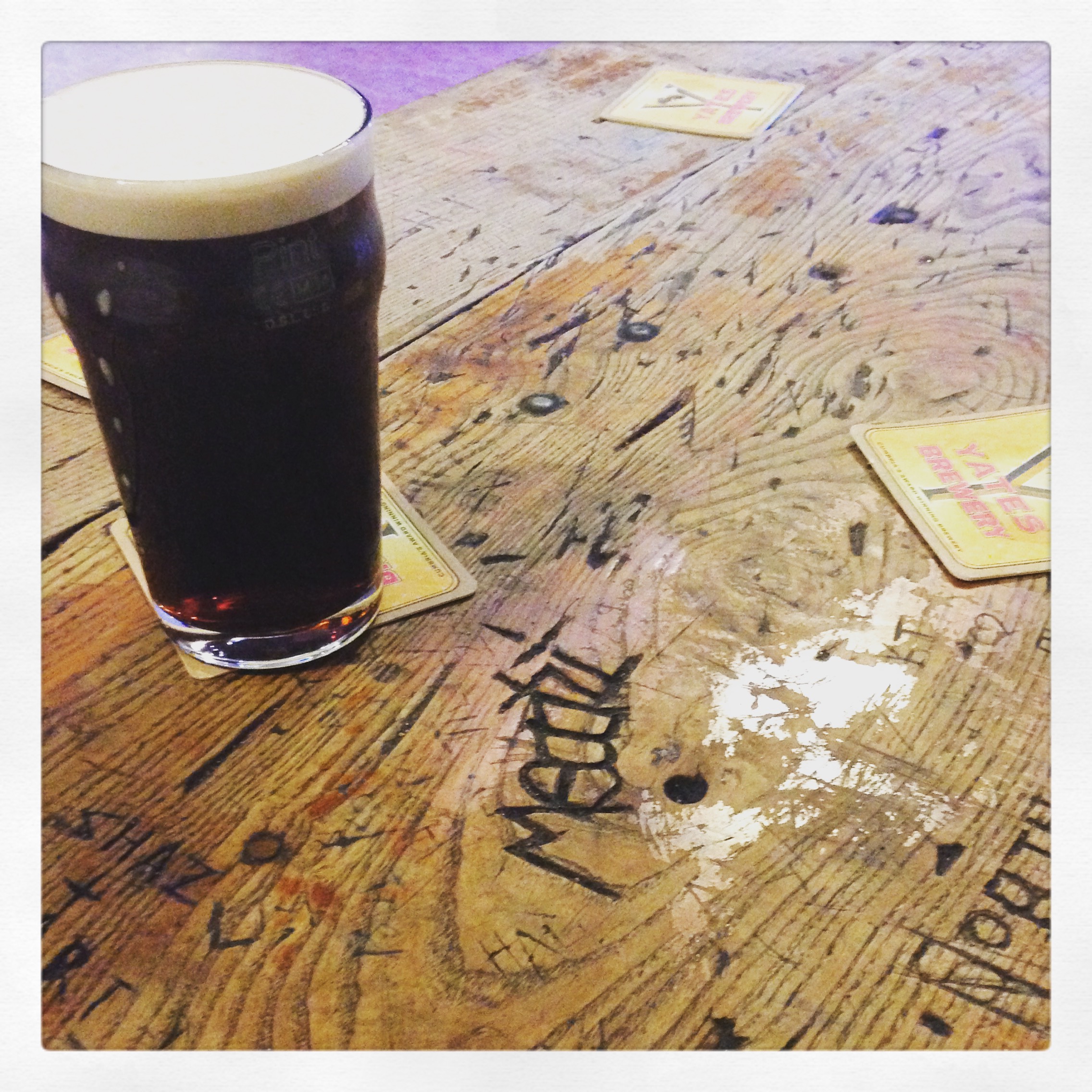
IMG_3863In the corner, a collage of memories from my under-canvas nights across the way. A bearded man, a sea dog far from the shores, playing a mandola, calling eyes closed to the Blackwater where his love was lost. Climbers, bejeweled with carabiners and pitons, sashes of lashed rope, eyes sparkling, talk jabbering, the fear of the overhang fading fast. Fell runners, salt crusted but laughing, mud and crud cementing their impossibly lithe limbs. All rest their pints on the old table, still here. Too small for plates but wide enough for two rounds. Planked, not true, legs as immobile as ever and the crack a touch wider now; but the marks are still there, scratched deep. Tattoos to time made with a knife tip not a needle: Tom; Mamut; Southman; Shaz and Bart. I drink my pint and leave no trace this time.

Back home there’s an old tree with characterful roots erupting through the pavement in twists and overlapping knots. Despite its age, it abounds with living vitality; the roots pushing up and out not down and across. Perhaps in a gust it will fall, a victim of its own vanity. Those roots have become a natural seat; school kids waiting to meet friends; an old timer resting his back; even those waiting in the queue for the Monday fish van. The bark, higher up gruff and rough is down here, polished and glossy. And the marks, scratched and scraped: Peter; MadJack; Fi; Marksman.

Maybe this is what it all boils down to. An old table in a valley pub; the bole of a tree poking above ground; petty vandalism or art; a sign to say “I was here”. A legacy of sorts.

Clinker built

It was a pleasure skiff hoiked up on the back of a trailer, held in place by crude-cut chocks, vivid yellow straps with self tensioning ratchets and thick rope, twisted at points into hand-sized knots and hairy with stick out wild strands of twine. A cruising boat; bicep-powered, now cruising up the dual carriageway to who knows where? The hull was chestnut brown, brush-swept varnish strokes caringly applied, it gleamed with buffed love but not so much that the knurls and knots couldn’t show through, the heartwood breathing beneath. A high back chair across the rear portion with a wrought iron topper the only concession to fashion; otherwise this high sitter was custom made for a proud Victorian gentleman, boater-topped with a rakish cravat and a blouson shirt opened up more than modesty should allow, riffling in the breeze.

But the boat, the hull, the bow: that recalls a much earlier time. Clinker built, overlapping stanchions, smooth-planed stringers and internal trusses hand-worked not machined. On a trailer, up the A38; a craft rooted in more than 1,300 years of history. Scaled up and mast added, it could take a sail, a sea, a journey to Vinland, or a rich Abbey on the coast, swilling over with gems, Communion wine and sacred texts. Although planed and sawn by man, the lines remain organic; the wood is cut but then seems to adapt and grow back, plank over plank, the caulk the underwear; the ribs the shoes. A work of beauty, Viking designed, still functional today and being put back to work on a boating lake in Rotherham or as a daily hire on the Ouse, who knows?

Clinker

Edward Cove hung himself, I recall, from a beam in the roof of his boat shed on Shadycombe Road. It was called the Island Quay boatyard; I was 12 and remember it vividly, front page news in the Gazette. The family couldn’t agree over which way to take the business and Edward could take no more. The end of over a hundred years of wooden boat building tradition was precipitated.  In that time, one of the few concessions, the fitting of choking, coughing inboard diesels, puthering and thrusting out their sooty smoke.  But these too were clinker built vessels and I loved them, the East Portlemouth ferries the police-jacket blue icon of the type, hunkering down and riding the waves, not fighting them, cutting them, pitching violently but conversing with them and reaching a rolling agreement.

Escargot Armageddon

The hosta, a North American native as I recall, thrives in our garden and I love them. Love them for the shapely, cup-handed leaves which gather the water, hold it and let it glisten in the light. Love them for the fecundity: the garden centre’s worse nightmare, a plant that doubles in volume each year, just split them and replant. Love them for their tolerance: light or shade, up they come, arms open to the world. I don’t know the varieties, but in our back door pots, we have a particularly lime green one, with variegated darker edges and a bright yellow hit of colour at the base on the inside. The hosta seems a perfect foil for us; on odd dark and gloomy Spring days, with broodingly malignant skies full of the potential of rain, they still shine as if powered by an inner luminescence.

In slug and snail world things are different. Whilst I may admire the architectural form, the stately leaves of the hosta, they look at them with a gourmand’s eye, only with out the critical faculties and food appreciation skills. Their cerebral cortex (I picture it as smaller and somewhat runnier than ours) lights up with synaptic chaos, like London viewed at night from the International Space Station “FOODFOODFOODFOOOOOODYUMYUMLETMEATIT” they yell, the blighters causing pandemonium. At first a scalloped edge; then a leaf chomped hungrily and before you know you weep into the curving dried brown stains of cold tea at the bottom of your cup as you survey the chewed stumps of your once prize blooms. Credit, it must be said, to the hostas for returning year after year.

But this would not do. It was time to take it to the mattresses. If need be, using a wretched mattress to camp out by the plants to catch the critters. To crush them. Destroy them. Smear them off the face of the earth. Without hurting them obviously. So the war starts in a phoney way. “We cannot harm the slugs. Let’s find a natural way ofmoving them on”.

Source: Pentax
Source: Pentax

Thus it was that I entered the world of slug removal research*: scouring the internet; raking up the wisdom of nearby horticulturalists; divining for family folklore. The creatively chemical ways that Homo Sapiens has developed to wreak Limaxocide on slugs and snails are devilishly endless, and will not be transcribed here – although some I’m sure will soon be banned by the EU. More ‘natural’ ways included scattering shells or fine gravel around the plant base; putting a small saucer of vinegar or beer nearby; crumble up a brillo pad or sneakily concealing small snips of copper wire in the vicinity (that’s why the trains have been delayed, I knew it).

I tried a few. None worked. The slugs are simply too numerous and the snails remarkably persistent for a creature devoid of speed. Instead, I am switching tactics; moving the slugs on (into the brown recycling bin – let them help the local council’s composting effort) and the snails, well – they don’t know it yet, but I am considering a farm, and to let the food cycle complete a full rotation.

* Sung to the words of The Cult’s ‘Love Removal Machine’

A galaxy of dandelions

I lurched into orbit today, dog-fueled
shoe-mounted thruster rockets,
propelled my aching body up the path,
a big, squat Space Shuttle.

The cosmological riot of colour reached out,
panchromatic, a spectrum, corona,
blinking and winking at me,
enveloping me.

Space it seems has dropped to earth
lying like an ethereal blanket over the waking Spring fields
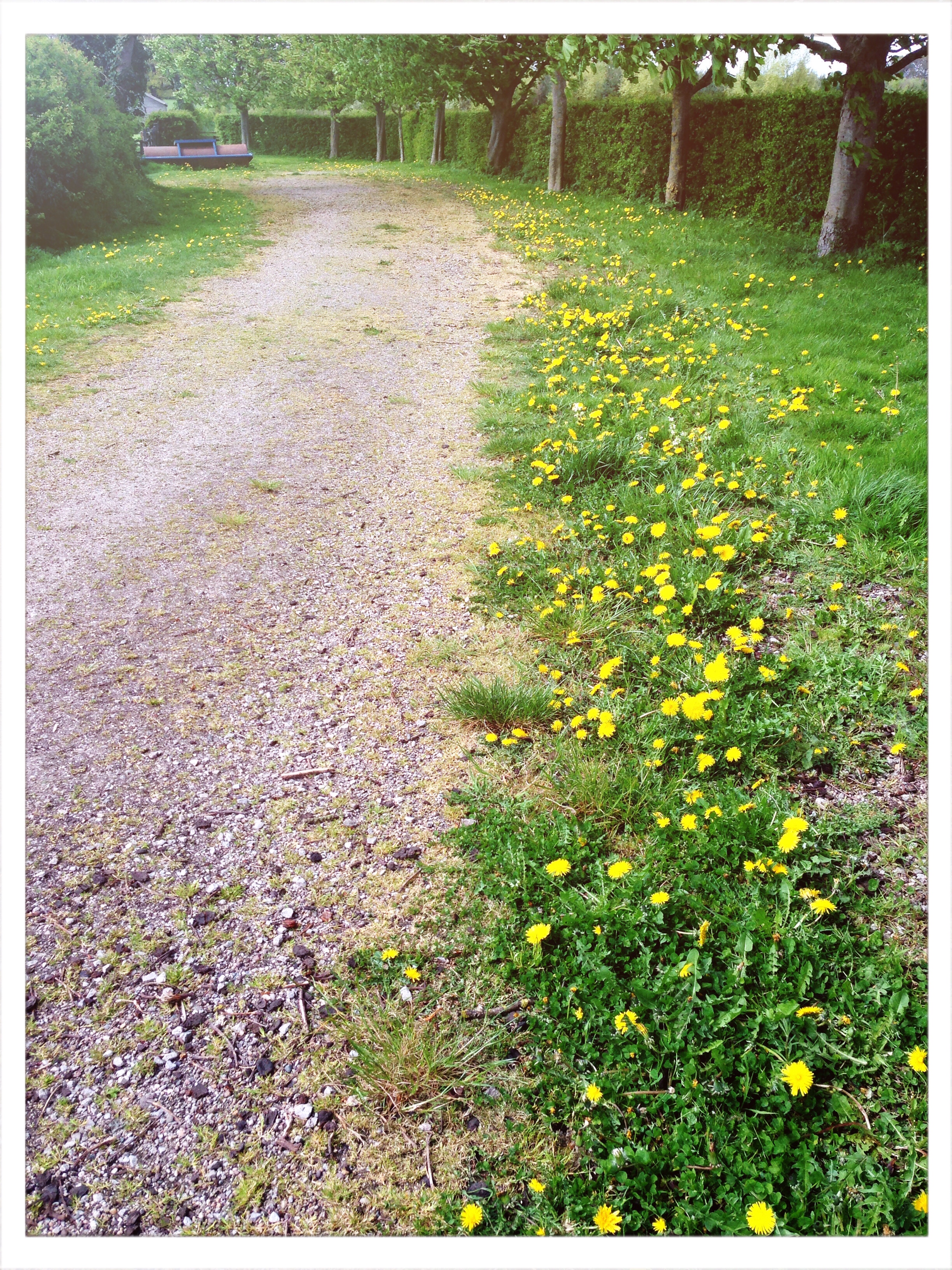
a constellation of dandelions dot this sky;
stars stretching off light years away,
even beyond the old wood (out Andromeda way)

A nebula of docks, their leaves curving through space,
bullying through the long grass, bent awkwardly
pushing against the foot of the cows’ steading.
With little rain, the paths are dusty, diaphanous
Asteroid Belt footpaths viewed through the telescope of my eyes.

And the sheep droppings, the damn
damn sheep droppings
bring me back to earth
but above, our own White Dwarf, massive, relentlessly beats
its drumroll of cold May heat.

IMG_3655

Four manatee

I feel at home on the water although my experience is limited: it’s a dangerous combination: a sea dog without the sea legs. But not today, fortunately. The weather was hot; with a lulling, lilting breeze off the sea rippling the surface of the gulf we were kayaking in. The rhythmic roll and pull of the paddle; the water slapping the hull; a small wake behind: the hours disappeared without a breath.

We made our way around low mangrove islands; their tendril roots hanging down like wizard’s boney fingers; spider crabs infesting them, scrambling up the roots to overhead branches, scrabbling, running, hanging; eyes on stalks peeking at you as we passed below their woodland home.  Urbanisations of oysters shells on the water line; popping and cracking with the movement of the tides and the flushing of the bath-warm water through them, like a forest fire catching, the distant sound of flames. A heron; stark white; black mascaraed eyes, standing in a shadowed break in the stream; the perfect spot, above the shallows. He eyes us briefly but his gaze is elsewhere, in the green waters below him, the plants fanning lazily, hermit crabs unfurling; and then; a recoiled neck, a spearing dart and a fish in his beak shaking. He shakes too, his neck quivers, gulping the fish down. Then the cycle starts again.  In the shallows outside the tunnel, grey mullet in shoals scitter randomly; needlefish spearing through the water with purpose; above ospreys pipe and watch what we watch but with different intent.

As we head for home a curving green arc in the water and a snout; a blow and a small plume of water.   Urgent calls; at first, it looks like a seal, but no; the broad, boxy snout is the give away: a sea cow, a manatee – at first, a pair we think, as two heads rise together entwined. We lightly turn our boats to follow them, and realise there are four, hoovering the sea grasses and rich silts under the shallow bay; arching their backs to dive; returning to the surface to idly chew and breathe. Their movements in slow-mo, considered, unhurried: their focus, feeding.  Not meaning to scare we keep our distance; but after brief curiosity, the manatees ignore us and at one point pass below our boat; cormorants hoping for stray fish follow them brushing our hull.

Manatee_fotor

Tall chimneys

The part of the world I’m originally from is known for its black and white (or ‘Magpie’, funnily enough) buildings. Crooked oak posts, cruck or ‘A’ frames, intricate carving counterpoised against rugged adse-hewn joints. The timbers are paint blackened, countless coats over hundreds of years, with jettied floors ideal for jettisoning night soil. The infill though is far from soiled, it is whitewashed, brightly pronounced even when a new splash is needed. But despite being seemingly too stark for a countryside setting, somehow the opposite becomes true, they fit into their surroundings, dig in, natural, at one. For me, though, it’s not the body of these vernacular buildings that I enjoy most, it’s the head, the hat. The chimneys weave and wind, often the chimney breast is concealed inside the house and the stacks suddenly erupt in swirls and twists.

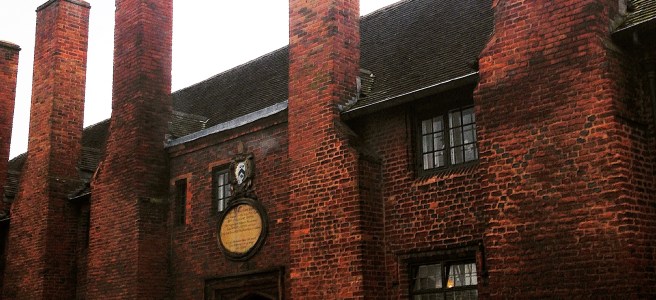
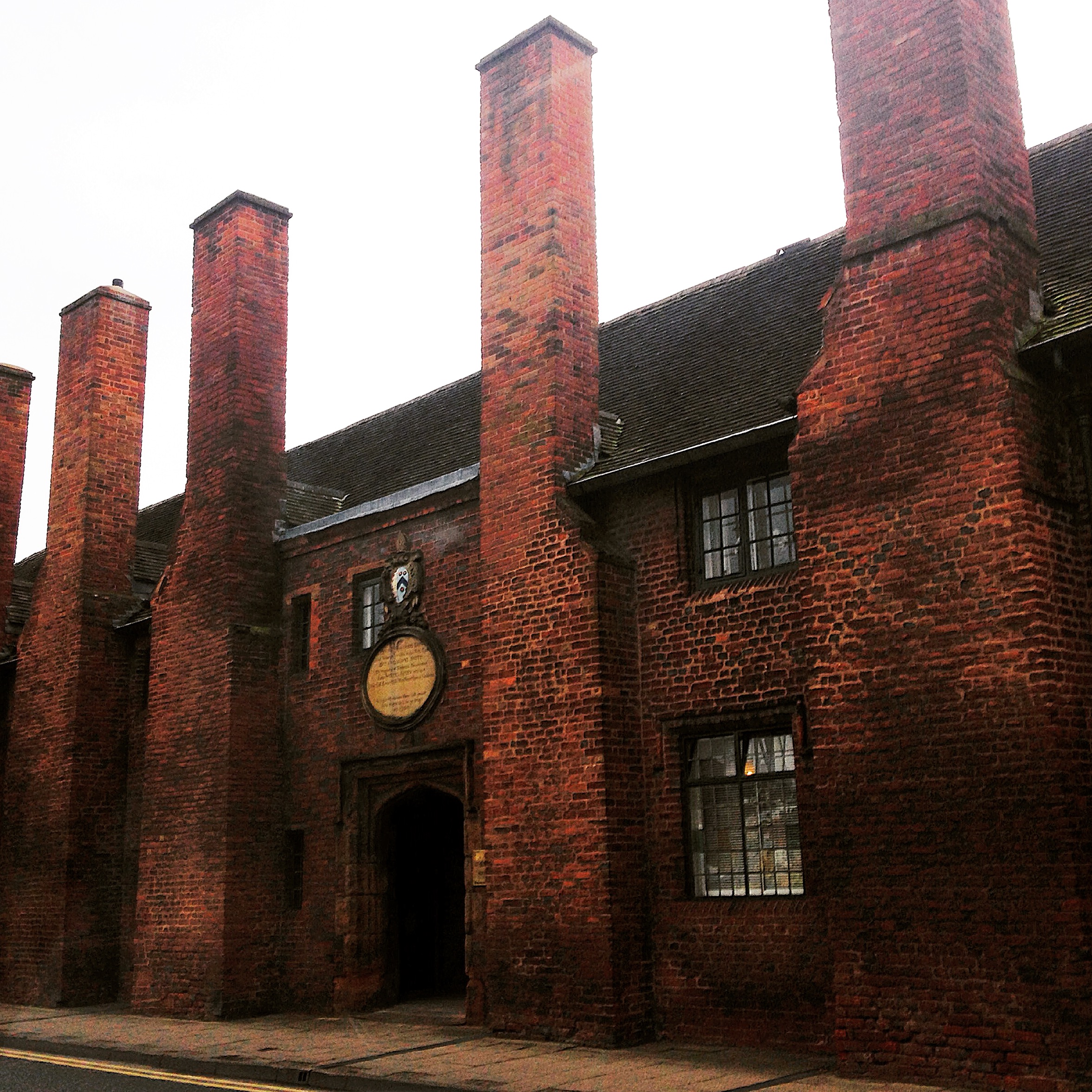
IMG_3303Travelling south and east though into the Midlands, the black and white houses ebb away. Timber buildings are still here, but the timber is usually left alone, or more typically hidden by the façade, brick or otherwise. And the chimneys too seem less grand. Maybe us Cheshire folk have always been a bit showy, but these Staffordshire chimneys are straight, honest, workmanlike. Maybe they just put their money into the parts of the house they could see when reading a book. But then you get a surprise: stuck in traffic in the old Cathedral city of Lichfield a few days ago, I see these beauties on the old hospital of St John (no Knights Templar as far as I could see but there probably is a connection). A row of tall chimneys rising from the pavement up. Not an afterthought, but so essential to the buildings, they seem almost like an enceinte, a castle wall, a fortification, a warning. Proudly vertical then, reaching up towards the clouds, but in such profusion that they have a strong horizontality  too, strengthening the roof line, the line of the lintels and leading the eye along and away.