Why do seagulls fly inland?

There’s a sinuous line of gravel pits shadowing the River Trent all along its confluence from the Dove in the north, to the Tame further south. They’re a two edged sword; on the one hand, an obvious physical blight, deep scars left from the ripping and destruction of diggers, tippers and tractors big enough to have come from a Transformers set. Meadows and farmland are gone overnight once they start; ancient trees, gnarled, cracked, characterful, part of your expectation of the landscape, levered out and shipped away. On the other, they prevent insidious urban creep and in turn create a new landscape, new habitats, and new life. Out of the flames a Phoenix rises, but in a different form.

The pits become lakes and find ingenious uses. From water ski centres, to nature reserves, to inland marinas with retail parks, short cuts joining them to the waterways, a honey pot of narrow boats. Others are left barren, hidden behind a stack of old shipping containers here or old army vehicles there. Some lie waiting for the grand promise of being the heart of a new village to be fulfilled.

There are many newcomers once the gravel lakes are formed: tree species I associate with dunelands, pines, young beech; and grasses, tufty and spiky underfoot. Swans move from a few families on the river to banks of them on the lakes; same too with Canada Geese. And everywhere there are seagulls, here, as far as it is possible to get from the coast in this island. Flocks of them land on the lakes and rise as one, like dust swirls stirred up in a desert; in the air, they hang, feathering their trim to become almost motionless before dropping in graceful arcs. Sometimes, but rarely, they give off their crying, coughing, bark but never with the abandon they do at the coast. These are Herring Gulls: with their cranberry legs and soft grey wings, but there are no herring here.
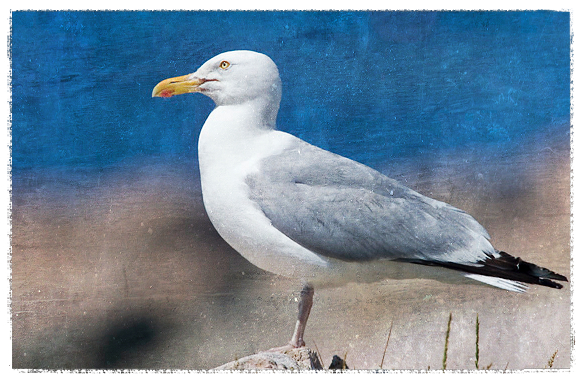
Screen Shot 2014-08-29 at 18_fotorMy daughter and I debated why they fly inland as we walked around the lip of one of the lakes. The gulls were showing off; swooping strongly, pulling out; shocking the moorhens. Perhaps there is an inland roost; a safer home for them to rear their chicks – but they’re with us all year round it seems, so it’s only a partial explanation, and probably fewer foxes near the sea. The weather was put forward too, moving ahead of incoming fronts, sensing the air, staying dry. But these are seagulls, as adept on the water as they are in the air: capable pilots, seamen and fell walkers. So why not food? Just as a feisty Gull who fixed me with a steely stare tried to steal my pasty one warm day at Mevagissey, why not gulls checking through the Kebab waste outside Spiceland, or for shards of chip shop detritus, batter bits or half crushed chips, they’re innards gently squeezing out onto the pavement, part crushed underfoot? Searching for the chips to go with their beer-battered herring.
Roadkill

August, 2012

Just the other week, I had a genuine shock, one of those stop you dead moments (if you are a person of a certain age at least): my youngest informed me that Blue Peter had finished. Blue Peter. Most notable perhaps for the combustible Advent Crown and early product placement in the form of the use of industrial quantities of double sided sticky tape (why could you never get it in Woolies?). I however, remember it for the tits. And starlings, and blackbirds and maybe, just maybe, a cuckoo. Every year, Blue Peter, in conjunction with the RSPB ran a bird count. The idea was that you’d throw ‘Supersize Me’ quantities of nuts and seeds on to your lawn then over the course of the whole weekend count all the birds. We used to squat in semi darkness in my Mum and Dad’s bedroom, binoculars to hand, peeking through a gap in the curtains so as not to frighten the wretched things, and work on a rota system, roping in all wings of the clan. We were highly democratic: there was no pecking order. Anyway, as it turns out, Blue Peter is now on the C Beebies channel. We can all sleep calmly in our beds.

Blasted sparrows. That’s my main memory. Small and dull, with a touch of brown on their brown bodies, set off by their brown beak and brown eyes. And they were fast movers with a pugnacity which meant they didn’t brook any nonsense from their winged brethren, no matter the size of adversary. They were like flocks of dwarf bouncers orchestrating the other birds around the feeding zone to their will. Or rather, to their quantity: no birds dared mess with the sparrows, because force of numbers alone meant they wouldn’t win. Sparrows ruled. End of.

Not today. Today you’ll be lucky if you spot a sparrow in your garden. The rise in the number of house cats is typically cited. I’m not so sure: admittedly, I’m not that attuned to cats but there don’t seem to be demonstrably more or less than a few years ago. And I don’t remember the last time I saw a moggy wandering around with a clutch of sparrows hanging from its jaws, ready to barbecue or enjoyed as a carpaccio.

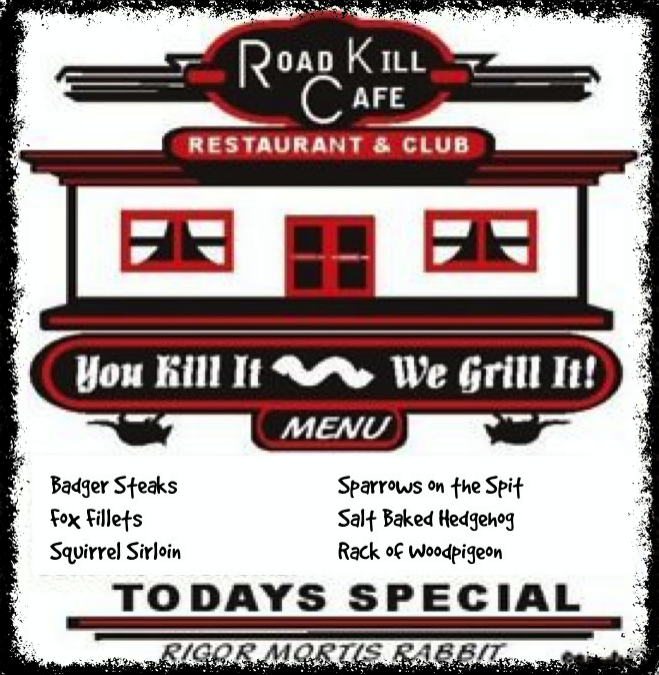
Link this if you will to the game of ‘beer can market share’. This highly entertaining game is best played from a push bike. Essentially, as you ride along, simply count up the number and type of beer cans in the verge; keep a mental note and then convert to a rough market share at the end of the ride. Stella Artois, Carling and Fosters seem to be the main winners, unsurprisingly, with pockets of San Miguel or Kronenbourg, generally in more urban areas, and more surprisingly, Carlsberg Special Brew which no longer seems to be the ‘on street drinkers’ beverage of choice, yet remains popular, verge-side. Recently though, I have converted this game to that of Roadkill Counting. This isn’t some sick festish. It’s just come into my consciousness: there simply seems to be more dead animals in the road.   In a car you wouldn’t notice – let’s be honest, the animal is probably smoking the radiator as you hum along to Elbow and the kids in the back are distracting you from the badger you’ve just taken out.

And here’s cause of the sparrow decline. Pigeons. These are the new barrow boys of the bird world. Wheeler dealing for some knock off Trill and ganging up on the jackdaws for pecking rights in the manor. I know this. I know this due to the roadkill count. Pigeons are right up there you see, and truth be told it’s quite sad. For the artless pigeon doesn’t take death in its stride. No, the hapless things are generally lying, splayed in the road with a look of abject bemusement and surprise, rather like Arthur Dent reacting to the Vogons arrival on Earth.  And their wings seem to take on statuesque shape and proportion. One, just last week had managed to land on the road, pecking for some titbit I suspect, just at the moment a Landie came along with its rather thin wheels and took it out in a graceful body shot. Rigamortis quickly set in, leaving the bird’s wings protruding up in the air, as if ready for take-off with its body level with the road. Thor’s helmet came to mind.

Slide1_fotorBut there are no sparrows. There are badgers; hedgehogs (many); the occasional fox, pheasants of course (they’re the jumbo jets of the avian world – long slow take off. Alas, their flightpath is too often across a busy carriageway) and even birds of prey (mid swoop take out?). But no, the answer to the decline of the sparrow is this: pigeon eats sparrow; car eats pigeon.

Steeple

A distant relative, an uncle at least once removed but more distant in terms of the knowing of him, I am aware of through story and hand-me-down snippets of information. Walter by name, a north countryman and bon viveur (some would say, a swanker) in life, lung cancer by death, steeple jack by trade. One story runs that to scare an ageing aunt he performed a hand stand on the blue clay ridge line of a 1930s terrace just off Canal Street.  I’ve heard tell that it was one handed. Embellished with time perhaps: but in essence, the lines of his saga weave consistently. A talented, braggish bloke, choppsy too; a showman, a great smoker, and at heart, a good man.  What’s certain is that he had a head for heights. Travelling around east Cheshire and south Lancashire repointing and repairing mill chimneys, brick and metal banded typically, 100, 200 foot high. Domestic work for cash, and for favours or back handers fixing up buildings with wind vanes and weathercocks. Once or twice he topped out church steeples – most often with lightning rods, less often with a Cross for light of a more divine nature.

IMG_2072_fotor50 odd miles away, today I live in the borderlands of Staffordshire and south Derbyshire, where the Trent, Tame, Mease and Swarbourne course across their flat, cobbled, gravelly confluence, snaking and splitting, the river banks edged with willow and ash; swans, wings arched back, hissing and spitting. Gravel pits shadow the river hereabouts where perhaps there should be levees, but as yet, no one has built on the flood plain so nature can feed the fields. Over the bailey bridge, tucking in your ears and edging gingerly, the ‘Derbyshire side’ of the river – actually a confusing hinterland where four counties intertwine – rises sharply as the valley cliff rises; the land has been heavily deforested, yet high hedged fields are verdant and rolling all the same. Occasionally an ancient tree stands sentinel in the middle, alone, proud. The villages are close-set and alliterative: Edingale and Elford, Haunton, Harlaston, Huddlesford. Their steeples too, rise sentinel – cleared of large stands of trees to block the view, they soar vertiginously, like poplars. At the bend in the road, the spire of Coton in the Elms stands out on a hilltop; from there, that of Lullington, hidden by yews close to, stands out clear, naked, beckoning; and from there, Clifton Campville, with its delicate spire of stone calls the eye like a comet with an earth coloured tail of mosses, liverworts and lichens.

Further north, the salty wind of the Irish sea blatters up Ennerdale, whipping the stands of conifers; their canopy swaying in unison like arms aloft as the ballad is sung. The fells rise quickly and rough here, drawing in tight, probing, pushing into the very heart of the mountains. The summits are on the bagging list: Scoat Fell, Pillar, Red Pike. One, cramped by its neighbour, is famous all the same; linked as it is by a stony and loose razor ridge, a gravelly, slippy arête, before a short, sharp clamber to a pyramid top: a mountain scribble on a beer mat. A child’s mountain. A mini Matterhorn, a Steeple of rock and scree.

Just the place, then, for a one handed hand stand.

Godisgood

One of our many rituals is Friday Pizza Night. It’s a signal; the end of the working week is here. An end to weekday patterns of snatched lunches or mismatched family meals. Everyone likes pizza: sitting round; a big knife; chopping big wedges unevenly, roughly, indecorously. From time to time, when time allows, we make fresh bases. Strong white flour, sieved and dusty, a fine veil drifts down by the morning. Greeny-yellow olive oil; flakes of Maldon salt and the magical yeast. To mix, we grab everything together in a claw, like a digger’s grab, pinching and squeezing, mud-flat mix oozing between fingers and thumbs. Not all of us love the kneading but I do and Em does too. Giving it some, elbows out, top teeth gently pressing into bottom lip as she pushes and folds and shoves and pulls.

Em had a pizza party for her birthday.  We made five times the normal amount and let it rise on top of the stove; a wet RNLI tea towel that’s seen better days, damp and laid across the oiled glass bowls. One hour. Two. Then a little pummel, divide and rise again. Down the cellar we left them, on metal baking sheets, loosely draped with cling-film, ten little bouncing cobs, creamy white, dusted with flour and the iridescent sheen of olive oil.

Godisgood.  That’s what the ale-wives called the wild yeasts they couldn’t see, assuming it was the hand of God. Godisgood: out of little comes plenty.  Godisgood: the invisible hand of a benign force, watching over us, keeping us, feeding us.

Next day: we lifted the latch on the angled cellar door and trod down the uneven stone steps. How do you describe the smell of Godisgood?  A brewery and fresh brewed beer, of course. But more than that: waxy lemon peals, unpasteurised cream and even, strangely attractive, a coat of fresh emulsion.  Now: no longer the Midlands cobs, but Lancashire oven-bottom muffins, flat and round, a hand wide and a thumb deep, pock marked by escaping gas, billowed out, nudging their neighbours.  We broke them apart, the kids flattening them with outstretched fingers; some flipped them, some threw and spun them.  Atopped by smears of pressed tomatoes, runny mozzarella, spicy pepperoni – all manner of treats.  The best pizzas ever?  Of course: Godisgood.

Pizza dough_fotor

Green Lanes

It is said that man makes paths; marks in the earth that pass through the ages.  For me, the opposite is true. The paths make marks on man; lines, etched in earth and etched in memory. Trod in, stamped through. Lasting through life.

One. The green lane to Tall Chimneys. Cuts down from the main road; high hedges of hawthorn, hollin and beech, bowl out, beer paunched. The road arcs down the valley side, descending into perspective, the hedges narrow it further. The lane, stony at first, rim-rutted and hobnail trod, becomes rougher still; and as it sesses down the shadow dappled bank, clinging on, it is more worn, escaping grit and cobbles slide away under foot, hissing and skipping away towards the brook. The verges, thin and feather-edged, soak up feet marks like moss or putty or ebb-washed beach; pliant, moist. At the breach where the pitch steepens, the green lane has cut through; not the cut of a knife or a digger trough, but of feet, of soles. Working boots, cussed and torn; northern clogs clontering & sparking on old river cobbles, long white scratches; Sunday School best, moving lithely to and fro, avoiding the holes where the skin of the lane has rubbed free. Trees overhanging, branch and leaf locked together like a children’s party game: elder and buller, rowan and hazelnut, fingers intertwined.   For the Horse Chestnuts they come, roots like flying buttresses propping up the steep soil sides; a mangrove in temperate loam.  A rope swing over the water; conkers like Morning Stars, or comets, with flying tails in the night.

Then. The green lane at Timbersbrook. The roads round The Cloud follow contours, from above, rings of ever decreasing horseshoes. Not the green lane; clambering straight up joining one road to another: a shortcut for people long forgotten, stopping before the steep face where we used to boulder. Lichen shod, mortar-free stone walls of uneven shards of black-flecked gritstone, furry with moss, topped by beech & ash. The lane, not green but grey, rutted, rocky, a river bed made by man. We drove up; wheels bouncing and skidding; tyres pinging with air-taught melody, the steering wheel turning unrestrained, bruising fingers, snapping at thumbs. My forehead, a damp coldness of fear. This was not my car.

Two of the green lanes in my head.

Green lane_fotor

Wun course too low

In an idle moment today, my fingers played internet search word association. What started with an attempt to buy my children’s names as internet domains, brought me, via a competition to win an iPad Air and a report on the tourist impact of the Tour de France on Yorkshire’s economy, to a delightful British custom.  I’m fascinated by these things, haling as I do from a hotbed of clog dancing and later married in Abbots Bromley, a Staffordshire village where a rag-tag assortment of locals don Anglo-Saxon deer horns and beat the parish boundaries in what could easily pass for a Breugel-inspired inharmonic drinking competition.

So what a delight to discover the Marsden Cuckoo Festival, named after (according to Wikipedia) a local legend of the Marsden Cuckoo. Marsden is also the birthplace of poet, playwright and sometime troubadour, Simon Armitage*. Simon’s translation of Sir Gawain and the Green Knight won plaudits for its sensitive handling of old northern English, so it seems right to find a reference to the festival featuring local dialect from The Huddersfield Daily Examiner.

“Many years ago the people of Marsden were aware that when the cuckoo arrived, so did the Spring and sunshine. They tried to keep Spring forever, by building a tower around the Cuckoo. Unfortunately, as the last stones were about to be laid, away flew the cuckoo. If only they’d built the tower one layer higher. As the legend says, it ,were nobbut just wun course too low’.”

Cuckoo_fotor

*And, with typical circularity, one of Simon’s books is ‘CloudCuckooLand’. I haven’t read it, but I will now.

The teapot with no spout and no handle

Imagine you inherited an old teapot from your Gran.  It’s a beauty; a bulbous round body, perfect for letting the tea meld and infuse. The spout is less beautiful, if anything it’s a bit dumpy, but as any teapot aficionado will tell you, it’s not what it looks like it how it pours.  And this spout pours perfectly, an arc of malty brown tea curves out, with no spills, no drips, no late glugging and spluttering.  And the handle; just right in the hand and curved enough away from the body of the pot itself to ensure no burns. The lid however was lost. Maybe there never was a lid, but it doesn’t matter, as you would for ever be taking it off to stick in the spoon and stir up the mash.  However you look at it, it is the perfect teapot.

You take it on to Flog It.  Turns out the teapot is almost 1000 years old – possibly a touch more.  A thousand years making brews – concoctions with feverfew & dandelions at first no doubt, but later, the fruits of camellia sinensis.  There is no other teapot like it.  It is beyond compare, beyond value.

And it is a pot that defines.  This pot is made from raw materials than root it to one area; a land of sandy heaths, salt beds, rocky outcrops, sweeping plains and high hills.  Grassy tussocks and sand dunes; salt marshes, ripe with sorrel and samphire and river estuaries carrying the world’s trade. It says: “I am from here, and only here. This is my land, and I am proud”.  It is priceless not just in what it is worth but also what it means.

Yet the teapot is disfigured.  Nameless bureaucrats with no feeling for place, no respect for  the timelines of centuries cutting through the ages break the pot.  They snap off the spout and roughly glue it onto a plasticine teacup.  They crack off the handle thinking it will sit better with another service.  And they stick on a lid that doesn’t match and isn’t needed.

See, the teapot isn’t a teapot after all. It is a place. It is my home. It is disfigured, an insult to the lands my family passed down to me, the stories they told. The teapot is my county. A county with a round body for the perfect brew; a spout that connects to the sea and lands belong and a handle, that reaches into the high hills making connections, now severed for administrative neatness.

But when this year’s Tour de France passes “through Derbyshire” and when the Open Gold Championship is won in “Merseyside”, I breathe: enough is enough.  It is time for rebirth.

Cheshire & Its Hundreds_fotorHistorical notes:

This is a map of the ancient county of Cheshire and its hundreds. Stretching from The Wirral in the west up into the High Peak in the east. Bordered to the north by the river Mersey (although this was an area of contention for many years between Lancashire and Cheshire), the south west by the River Dee and in the south east by the hills of Congleton Edge and Mow Cop. At the time of Domesday, the county spread further west into areas that are now north Wales. For almost 900 years it enjoyed its distinctive shape and became known as the teapot with no lid.

On 1st April 1974, following the Local Government Act of 1972,  the county ceased to exist in its teapotian form, as local government was reorganised. The main urban centres passed to other counties (Stockport, Altrincham and Stalybridge to Greater Manchester), Birkinhead, Wallasey, Hoylake to Merseyside. The new administrative area gained Warrington, north of the Mersey as a nose-thumb to Lancastrians of old.  The High Peak spur was to stay in Cheshire but in the end was joined to Derbyshire because it would have become an ‘exclave’ (unattached) and therefore untidy in the eyes of the 70’s bureaucrats.  I mean, we can’t have Cheshire Bin Wagons driving through Greater Manchester, can we? Today, officially, the county of Cheshire does not exist following a further reorganisation in 2009, being split into four administrative boroughs including ‘Cheshire East’ (rather than East Cheshire) and Cheshire West & Chester (rather than Chester & West Cheshire).

To date, there seems to be general ambivalence (maybe lack of awareness) to the cause of reuniting the County, unlike in other areas (Huntingdonshire anyone?).  But the ‘lost’ areas make up a critical part of the county’s sense of self, part of its geographic variety and in some respects cement the county’s northern roots – the border with for example Yorkshire is now lost (and indeed, some areas historically in the county of Yorkshire now lie in Greater Manchester – I mean, come on).  

I want to go up Longdendale in the county of Cheshire, climb up through Woodhead and Holme Moss and drop into Holmfirth for tea with our neighbours, in the county of Yorkshire again.  And have that tea from a mended teapot.

Biscuit conversation

It all started with a custard cream.

They are, clearly, the epitome of biscuity indulgence. Two sweetly crunchy – but not too crunchy – layers; pale yet tasty, like a Swedish beach volleyballer at the start of the season, they dreamily sandwich the cream, that moreishly off-yellow, enticingly soft yet strangely brittle, layer of vanillary squishy goodness.  And I had eaten the last one.

This wouldn’t have been too bad, but all that was left were digestives, some broken and the odd rich tea.  I had, unwittingly committed a cardinal biscuit sin.  Oh! If only I had been more observant; less hawkish about spotting and gobbling down my prey, the embarrassment could have been saved!

Diversionary tactics. That was my only option.

“I’m not sure why everyone is so upset. They’re not the best biscuits anyway”, I ventured combatively, tentatively prodding the conversation for weak points. “Hob Nobs beat custard creams hands down. Chocolate ideally, but they don’t have to be”.

“No! No!”, a cacophony of disagreement washed my way. Success, I imagined, was mine.

But no. “You can’t change the subject. You’ve taken the last custard cream. We probably won’t invite you again”, said John. “Mind you..” he paused. “…at least you didn’t take my all time favourite. I do like a … Lemon Puff”.

Waves of biscuity nostalgia rippled out. The Lemon Puff.  Flaky and crumbly on the outside, with a wash of transparent, crunchy icing sugar to bite through and between the layers, a tart, sharp lemon middle. “Yes! They are amazing! I haven’t had them for years!”. 

“Marks and Spencer” chimed in Mrs P. “That’s where you get them from”.

“But they’re no good for dunking”.

Silence. Then revolt!

“Urrrgh! No! How can you dunk?  It’s a crime to biscuitness!”  Mrs W just pulled a face. Her position was clear.

“Only as long as you don’t dunk all the way in” added John, with a furtive twitch of his eyebrow. “And anyway, you can dunk anything creamy. Custard creams, Bourbon Creams.. they’re all fine”

“Anyway” added Mrs P, ignoring dunking slight, “I like Jammy Dodgers”.

“Yes…” I added. “But only if they have the jam and cream”, I added. “I’m never sure if it is the real Jammy Dodger that I like. It has to have that cream”

“They’re from M&S” added Mrs P, who I now realised was secretly popping down to Mark’s for her regular confectionery supply, such was her intricate knowledge of their baked goods range. “Jammy Dodgers just have jam. That’s why they’re, well, jammy”

“Are you sure you’re not thinking of Happy Faces?”, added John. They’re jammy and creamy. Good for dunking and eating alone” he added with a conciliatory wink.

“My all time favourite biscuit? Well it’s a polariser”, I said. “Fig Rolls.  But not the ones that have been cut off. They have to have the folded ends, almost like they’re fully enclosed.”   The response made it clear that Fig Rolls could not vie for biscuit leadership. Too many nay sayers. Too many heretics yet to see the Light.

A change of tack. “Sometimes, I just want a simple biscuit. A Ginger Nut. Or even a Nice.”

“Which Nice though?” quizzed John instantly. “The standard one, or the one with a layer of granulated sugar on top?  It has to be that one. The other reminds me of my Nan.  Or….” he paused, “..it could be the thin one with a layer of cream in the middle”.

“What?” I asked. “You mean a Custard Cream?”

It all ended with a Custard Cream. It always does.

Mind you. Good job no one mentioned Jaspers.

Happy Faces. Not that Happy...
Happy Faces. Not that Happy…

The folding nausea of Brompton

November 2012.  Musings of a long distance commuter.

The Principle of Selective Attention. That was it. You know how you can walk the world oblivious to something – then somehow it’s brought to your attention and you see it all the time? That was it. Just like when my wife decided to buy a new Beetle. Apparently there had been a big launch, loads of press and PR, but it had passed me by. Until my wife saw one in the street: “There!” she said, “There’s one!” You couldn’t miss it at the time – unlike anything else on the road – and that was the moment. The Principle of Selection Attention (let’s call it ‘The PSA’ as he’s an old friend now) – the new Beetle – everywhere.

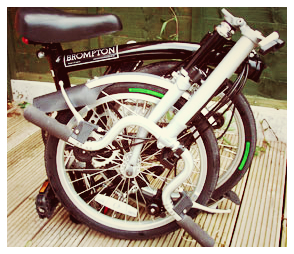
And that was it with Bromptons too. In fairness, as a cyclist, obviously I knew about Brompton’s. Ugly thing. Fold. Weird handlebars. Commuters. But they had never sunk in. A mere bike-shaped shadow passing across my consciousness; not cutting through; not managing to prioritise itself above the millions of other, more important things. Not now though.

Now I work in London. Now, loathe though I am to admit it, I am a London commuter myself. And Bromptons are everywhere. Like a pestilent storm of locusts, gnashing, chomping, biting at the periphery of my vision. Swooping; darting; nipping. Next to me on the platform. There when I look out of the window. Folded under a table in a cafe. Peeking at me. Teasing me. Black ones mainly. And red. And yellow. And a few white ones. Even a pink one down Margaret Street. Then the varnished bare metal one with nice golden brazing. Seen a few of them now.

And handlebars. Not all weird, up turned zig-zag affairs. Some just weirdly straight. Or only mildly bent. They even have gears. And Brooks saddles. And a bell with a particular tone. Not too effeminate that you ignore it; not too deeply resonant that it gets lost in all the urban background noise. Just right – mid tone, on the edge of annoying yet bullseye for ‘getting you noticed’. Suspension too. Old school – a massive elastomer (rubber bung) on the back wheel, for soaking up the speed bumps, potholes and inattentive pedestrian. A reflection perhaps on the svelte urbanites with low body fat who actually need some extra padding.

Oh, and the engineering. These are not machines built to fail; they are built to last you a lifetime. The quality of the welding; the choice of material; the ingenuity and solidity – the beauty even – of the various folding mechanisms. And discovery. Couples pedalling across the US on Bromptons. Lands End to John o’Groats – of course; been there, done it, too late my friend. You Tube clips now being sent to me of trick riders doing moves clearly in breach of the manufacturer’s warranty. And…..damn it! I want one.

Brompton_fotor

July 2014. E Bay

I went on to the Brompton website to ‘build my own’. £1,200 or thereabouts. £1,200. Cor. Next stop: e bay; placed a bid on a second hand one. Right at the last minute, clever me.  Lost out by £50. Right at the last minute. Cor. ©

Morning Mister Magpie

A Third Place

IMG_1792IMG_1797

Howard Schultz, founder of Starbucks, is widely credited with the ‘third place’ insight. In fact, I quote, 

“If home is the primary or ‘first’ place where a person connects with others, and if work is a ‘second place’, then a public space such as a coffee house is…. a ‘third place’. A social yet personal environment between one’s house and job, where people can connect with others and reconnect with themselves. From the beginning Starbucks set out to provide just such an invaluable opportunity”

I don’t have a beef with Starbucks. Many do, either because of their alleged tax cleverness, or due to their ubiquity.  But living outside London, they pop up less frequently and are often better quality. There’s a drive through not far from me which is excellent – the staff clearly value their jobs, love what they do and compared with Welcome Break or Road Chef, it’s a beacon of quality on the road.

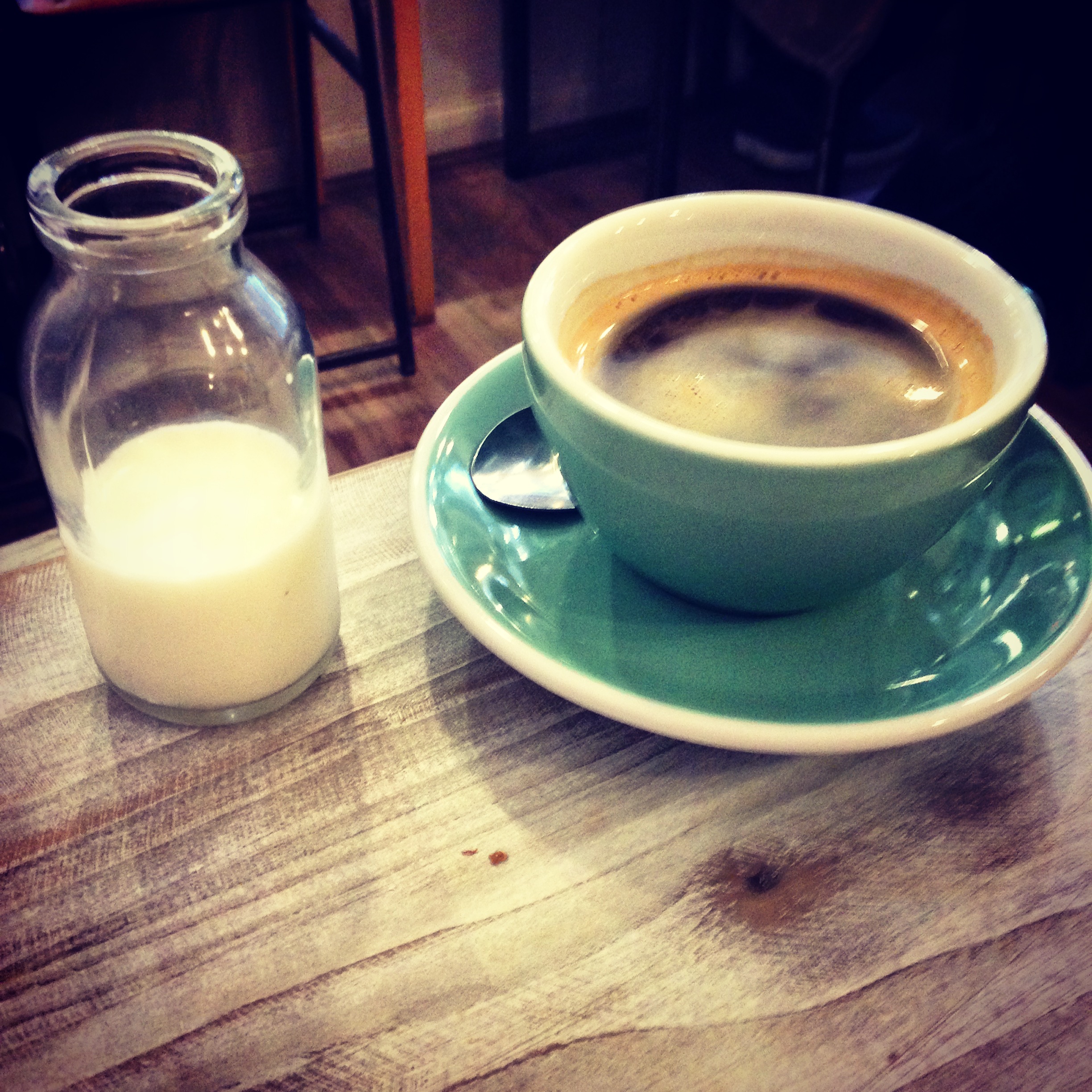
Brand consistency equals reliability, both a blessing and a curse (if you don’t live up to expectations). That’s why I like independent coffee shops. Oh, of course, many just get it wrong but when you find the opposite, someone who nails the ambience, the drinks and the food, they can’t be beaten.  On my Ikonic Birmingham trip I discovered Faculty, nestled somewhat gloomily, in the Piccadilly Arcade close to New Street station. Why Faculty? I’m not sure. It’s too small to study there for a prolonged period of time and there don’t be seem to be Professors professorially conspiring around the eclectic collection of tables between lectures either.  But there was a Chemistry Lab vibe hunkering down around a recycle and reuse ethic.  I’m not sure the counter was made from old Chemistry classroom benches but it felt like (in a good way).  The cakes most certainly weren’t though.  The peanut butter brownie I had was from the grave: it was simply to die for.  And the milk for the coffee in mini-urns was a nice touch.  Next step: heat coffee for drip method with Bunsen Burners. Note to self.

Go there:

http://www.facultycoffee.com
@facultycoffee