St. Pancras Ironworks

As a signal of this country’s economic transformation, you need go no further than our lofty, mighty stations.  They are a history in themselves: plotting a journey through the last 175 years:  cathedrals to Britain’s industrial might; vast spans of iron, fretted and decorated, caverns to transport and the glory of steam.   And these were not just temples in our capital, but throughout the country:  Temple Meads in Bristol; the curving platforms of York; Piccadilly and Victoria in Manchester; even end of the line stops were impressive: Grimsby; Lime Street. Some were like castles: Carlisle or transformed the terrain itself, like Waverley in Edinburgh.  Most saw turmoil and demise before being reinvented for broader and different uses.
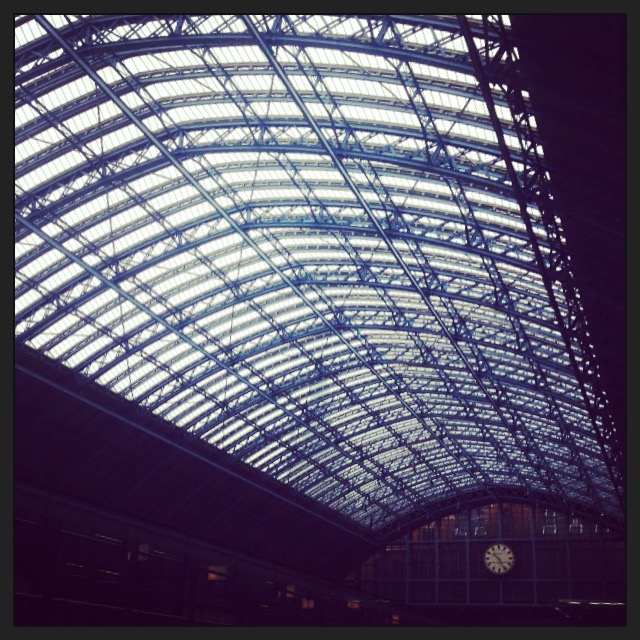
IMG_3004St Pancras in London is the finest.  Fittingly, trains from the Continent arrive here: and what a statement: after years of political re-engineering, of turmoil; of strikes, of economic doldrum-drifting, St Pancras says, ‘London is reborn, London is back’. And if you arrive from Corby, Luton or Sevenoaks you stride purposefully forward too, dreaming the same dream.  It is like a town in itself. Upstairs the daylight and nightlife: a crafty coffee in Benugo espresso bar perhaps, or a sip of Dom Perignon in a bar of a different kind; or even a Branzino* con palate e salsa in Carluccio’s, before your porter lifts your trunk into the carriage and John Betjeman waves you away  Downstairs is the ‘town’; food and clothes shops; luggage, watches; a re-sole for your shoes or a simple polish; pay in a cheque or check on your family whilst hammering some honky-tonk on the old piano. Or grab a craft beer in the Sourced market, which is ironic given that the pillars between which today’s shops sit were not defined with Imperial exactitude, but rather by the more arbitrary length of a barrel of Bass’ beer – the undercroft was built and paid for by the massive brewers of Burton.

IMG_3003Today, our engineering in particular is focused on functional.  Housing companies who build 3,500 houses a year have no time for beauty; no care for individuality or bespoke design. They are about numbers not a name. Not so the Victorians.  As you approach along Euston Road, Gilbert Scott’s design grabs all of you, moves you; in fact, it grabs you by the throat and punches the breath out of you. Vistas emerge and open up: through to the booking hall here; a glimpse of the vast roof there; away into the depths for the Tube this way. Beauty is in the details too. The iron roof sails away from you like a Cathedral’s flying buttress, but there, in a nook, is the name of the manufacturer, wrought in for permanence, with pride in a job well done, a legacy left.

IMG_2967Iron was the pen and ink of the Victorian engineer. And St Pancras is not just a station but a place. And that place put its name to an iron foundry whose name crops up across the land. Not in massive structures that we cannot fail to notice; but in altogether, more ordinary, more humble work. For those who care to look, there is the reward: The St Pancras Ironworks Company manufactured utilitarian iron pieces: man-hole covers, gutters; stair-treads.  What design, what beauty in a cover for a coal chute or for a Cardiff drain . The Works has gone now, but its Product remains.  In their own way, the legacy of these human sized pieces is as moving and impressive as the jaw dropping edifice to travel which more famously carries its name still.
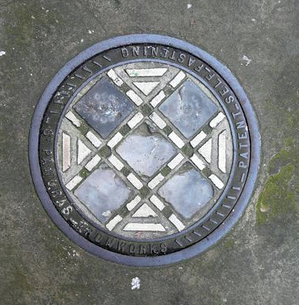
St Pancras Ironworks*Which, funnily enough, given who paid for the place**, is sea bass.

**I shall resist the temptation, fish puns are endless.
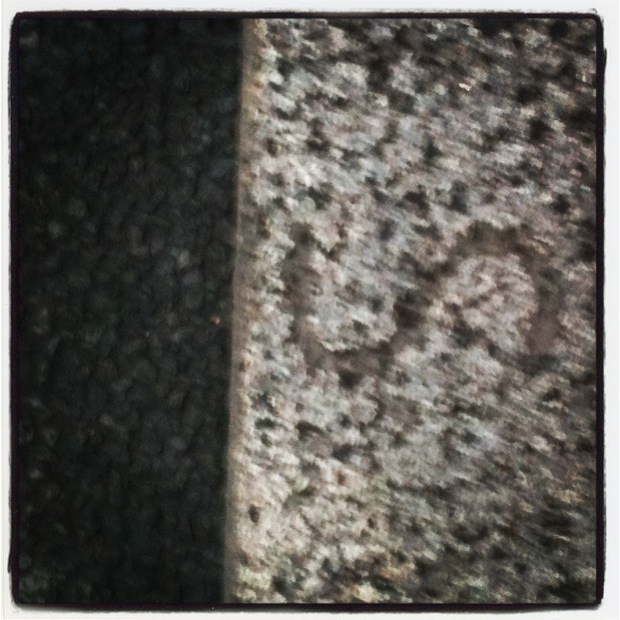
Mason’s marks

My Dad once told me off for looking down as I walked. He thought it showed a lack of confidence, a shambling man of the future maybe, losing his way in life, pushing a tartan shopping trolley.  Yet I was looking at sycamore keys as they gathered below the kerbs, some washing towards the drains, others interlocking, making knots, arboreal daisy-chains.

My gaze in cities is up; previous generations put detail into their upper storeys that today we shun as wasted effort, wasted cost. Elaborate Ruabon brick patterns in Manchester, mock terracotta facades in Birmingham, or iridescent tiles in Mortimer Street. Cupolas and pediments, often out of eye line; leading, curved and cut in flowing patterns, visible only to pigeons and skyscraper window cleaners.

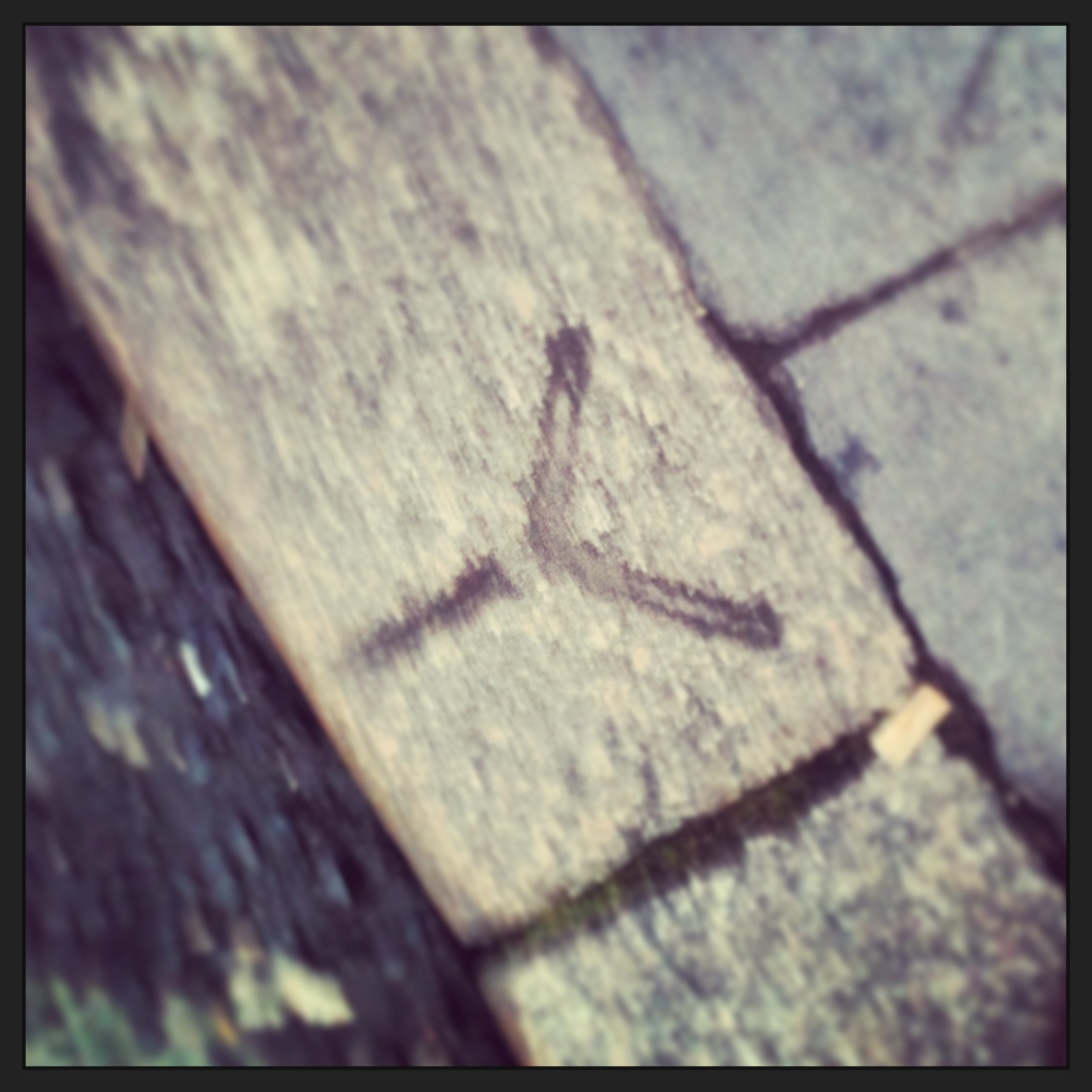
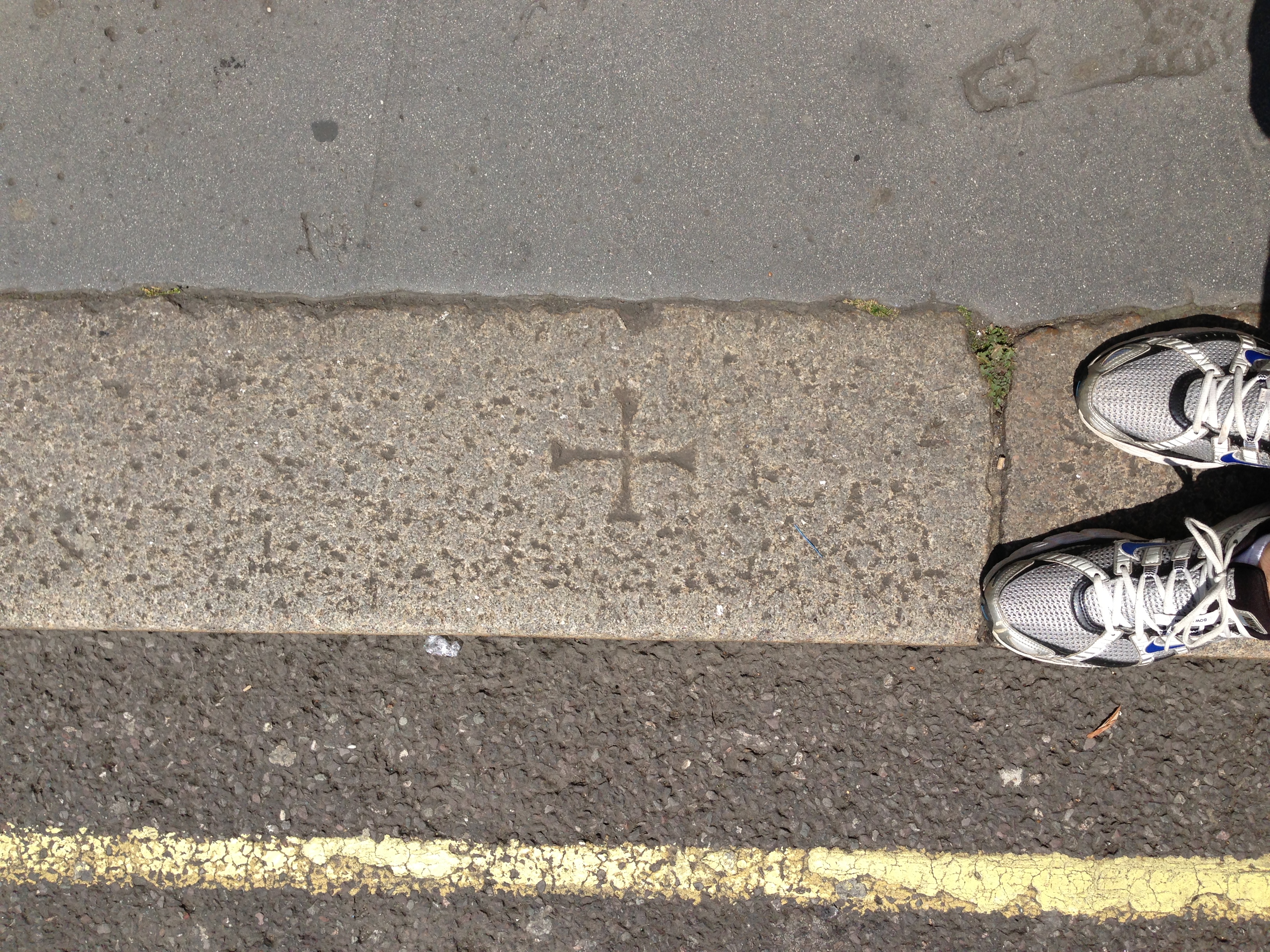
Yet there is merit in the downward glance too; wrought iron manhole covers proudly pronouncing their manufacturer. Thick glass tiles too, like old NHS glass lenses, which remind me of ‘Dan Dann, a  lavatory man’ in Carry on Screaming, for whom the tiles gave him his only natural light*.  But most of all, I’m intrigued by the mason’s marks on kerbstones.  Maltese crosses, diamonds, arrows, capital letters, even rune like symbols.  Were these early advertising? Merely a symbol of pride? Or perhaps a record for payment purposes?

IMG_2568 IMG_2566 IMG_0182

*That is, until Oddjob bopped him on the head and made his world go dark.

The Lighting Emporium

The old catalogues for Christopher Wray’s Lighting Emporium were as beautiful as the lights themselves. Thumb thick, with heavy gauge matte paper and deft touches of spot varnish, they oozed quality. And turning page after page,  lights of all denominations: art nouveau, deco, modern & antique, restorations, Moorcroft bases, Tiffany lanterns.  At one point, this was the largest chain of lighting shops of the country; manufactured mainly in Birmingham, in an old brick factory just off a ring road. It was precariously placed, like a wizard’s home that should remain unseen but peeks through the dimensions into ours.  The company is still going today, but in reduced circumstances. This picture tells a tale: the retail shop front, recently abandoned, sits in a tumbling brick former factory; slate roofs of different pitches; curving and angled drainpipes dash across precipitous voids; prominent chimney stacks, sprouting ferns and Buddleia.  It would have been, in its Victorian heyday, a works, a crucible of industry.  Today, it stands next to Birmingham’s ThinkTank – a futuristic building taking inspiration from the industrial past and Birmingham City University, an institution promoting, amongst other things, a scientific tomorrow.  It is a curious juxtaposition.

IMG_3140

Which way up?

IMG_3039There’s a fishing pool near us of uncertain origin. It could be a kettle hole, where moons ago a lump of rotting glacial ice rested, covered in a blanket of debris, mulch and leaves, then caved in. It’s pock-marked with them round here. But it’s unlikely: the hand of man seems evident; too round, too shallow, too manicured.

A pleasant spot all the same though; especially when the mercury drops. The ice freezes, edges first, then spreads in arcs, creating fantails, overlapping, like a decorator gone berzerk with Artex, or a child laying out Askey’s ice cream wafers in a pattern on the table.   The Moorhens are more skittish than ever as they bob across the ice, looking at their own reflections, walking like Egyptians.

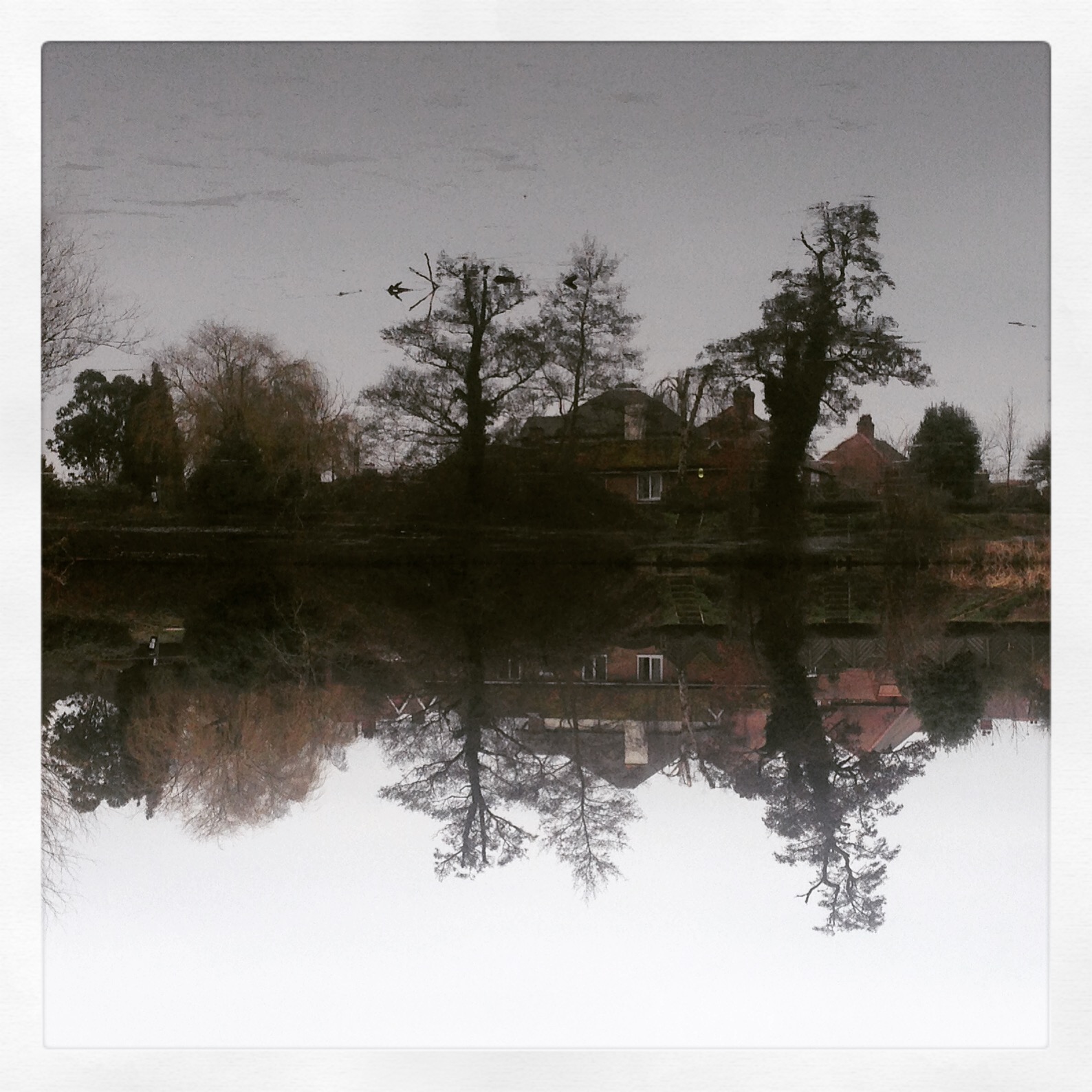
A tennis ball rests on the ice, counting down to its own oblivion. The sticks may float to safety. And caught in a moment, perfect calm. Trees and houses opposite reflected symmetrically. Which way up?

Little bridges

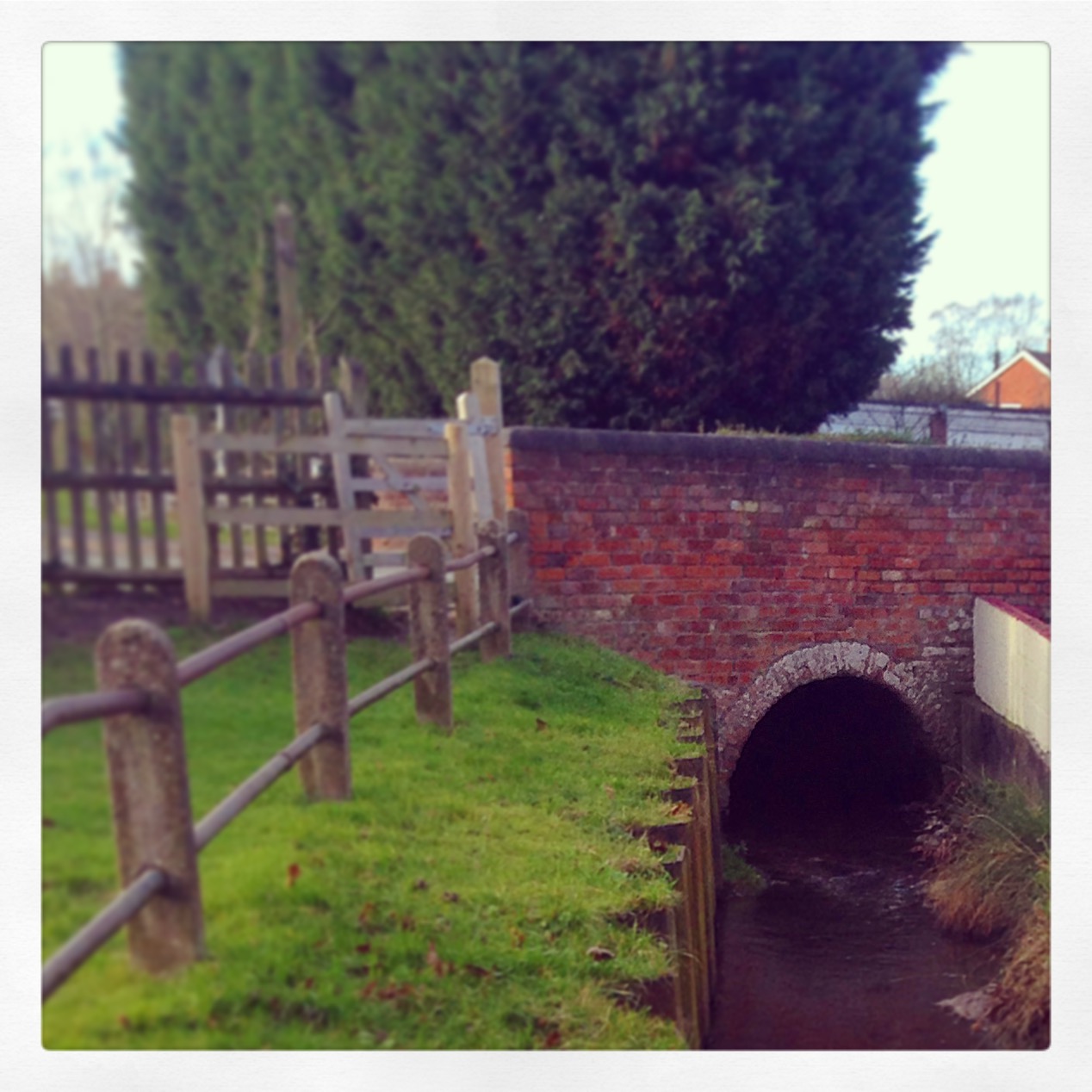
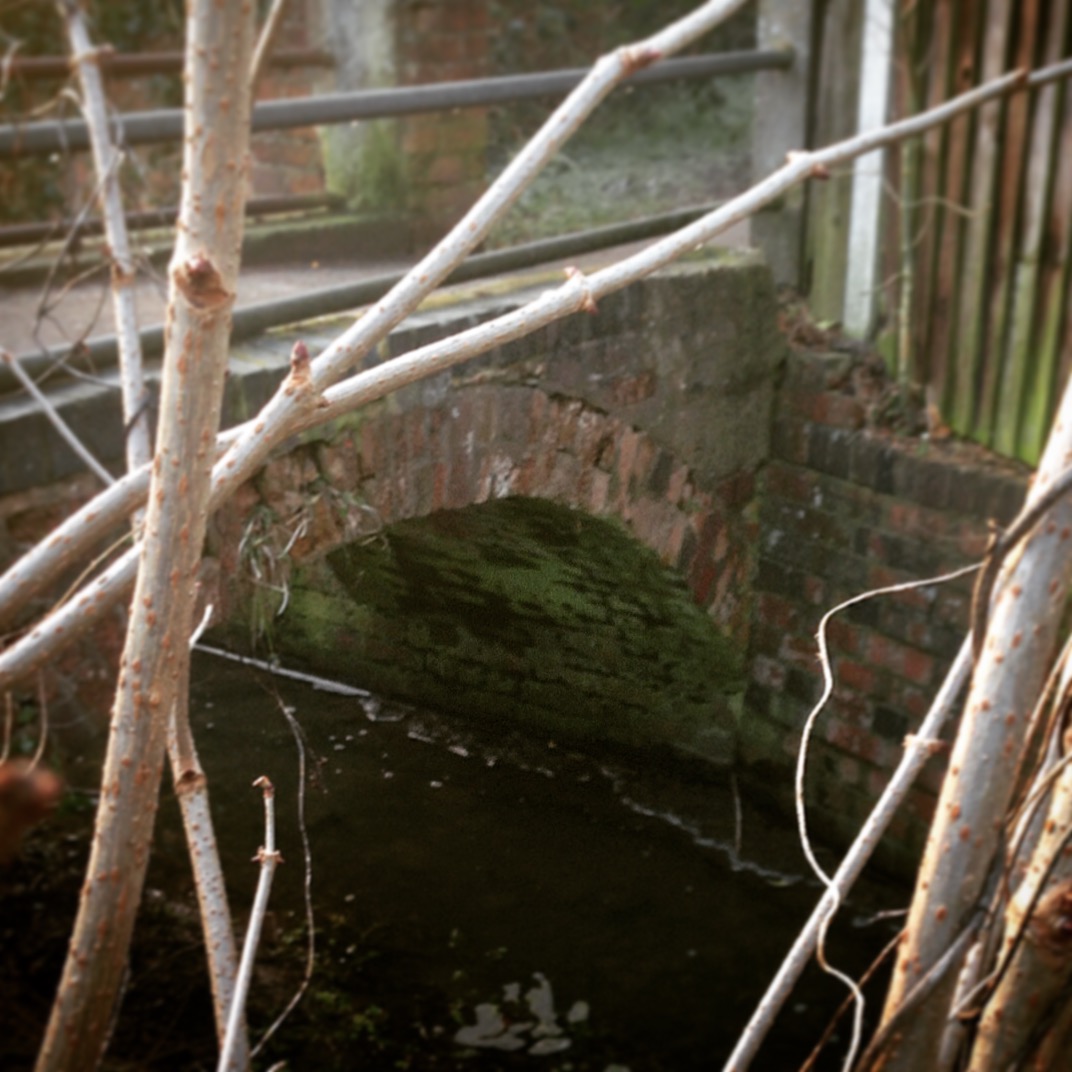
Building a bridge is an act of civilisation. Opening up new lands; connecting disconnected peoples; aiding trade; spreading language; sharing cultures, ameliorating war and destruction. Glorious bridges are celebrated: Tower Bridge; London Bridge; the Millennium Bridge, Sydney Harbour Bridge; Golden Gate; Brooklyn Bridge, Prague’s Charles Bridge. The Ponte Vecchio, The Bridge of Sighs. Mostar’s Stari Most, now rebuilt after the Balkan conflicts. France’s Millau Viaduct. Suspension Bridges: Brunel’s Clifton Suspension Bridge or Stephenson’s Menai Straits Bridge. The bridge over the Bosphorous in Istanbul, or the Pont Neuf in Paris. Yet all around us are smaller bridges, smaller acts of civilisation. Connecting one family with another; allowing the cattle to cross with dry hooves not plunge through a ford. Opening up a new snicket between two fields or a new road to a new estate. The little bridges are underfoot us all but hidden. Here, a quiet celebration IMG_2911 IMG_3032 IMG_3022

Longnix

grey_heron_ireland2_fotorA looming grey morning by the river, mist whispering through the bent reeds and feather-ended grasses that wave, regally, breezily. Afar, a loose brush stroke of blue; a distant sun illuminating the lower Peaks flourescently; shining like a glint of silver on an old clock face.

The longnix, the grey predator, stands stock still on the river bank. Her movements are imperceptible; geologic, intent-filled. Statuesque, she eyes a river rock pool, flush with bright gravel and water-oiled cobbles; previously I had seen her nestling under an overhanging tor worn smooth by the persistent, urgent caresses of the wind, in the long grass, hard staring the opal black water.    She is the hunter. Not a lion or wolf, but an assassin; she steps in and becomes the shadows; her neck is a spear gun, flaring, darting, incisive. A starter pistol, an instant reaction. The stickleback’s back is snapped back; then broken, swallowed, gone.

coppi_fotorDisturbed; longnix is unruly, comical. The take-off strained; loping, curving, sagging; struggling to make altitude before at last she is away, wings spreading and eventual grace. Built for stillness or flight; the rest, awkward.
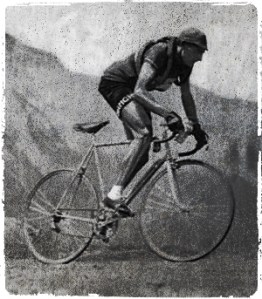
Unawares, she transmutes into a champion cyclist; “il campionissimo”; thin limbed and lithe, knees knocking, walking like a baby giraffe or foal – best when still; then on the bike, the longnix stands, unfurls, opens up, wings spreading, takes off. Built for stillness or for flight, the rest, awkward.

Trees, gawping

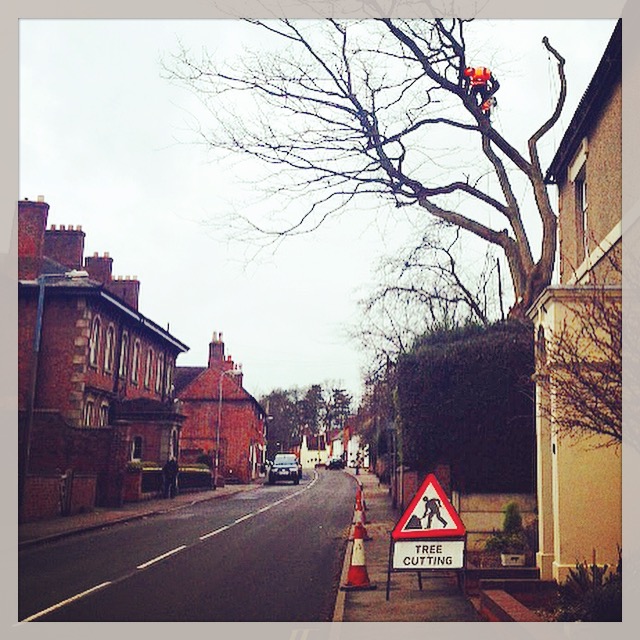
Earlier this week, a tree surgeon took whirring blades to some cheekily overhanging branches over our road. Shame really: I like it when the leaves are box-clipped as buses and lorries trim them from below.  At the moment though, the branches are naked and forlorn, unable to hunker down under their coat against the perishing icy blasts of the easterlies. Their cheek was exposed; the blades inevitable.

Unless, like me,  you are boreally disposed, trees typically disappear into the shadows; a key-line or highlight of dark matter around our expected views of the world; a penumbra. We notice them when they are gone, starkness revealed, but rarely celebrate them in life.  Strange then that as the day-glo clad forester did his work, there was a constant drip drip drip of an audience. Standing opposite, calling out, asking a question, or quietly noticing and enjoying the cropping and bobbing of the tree’s new styling. This tree softens the view down the road, the perspective teetering away round a bend in the distance. It’s gone now, but the main trunk remains, proud, strong, tall, ready to burst into new life with focused vitality in the Spring. A new vista will emerge.

IMG_2910

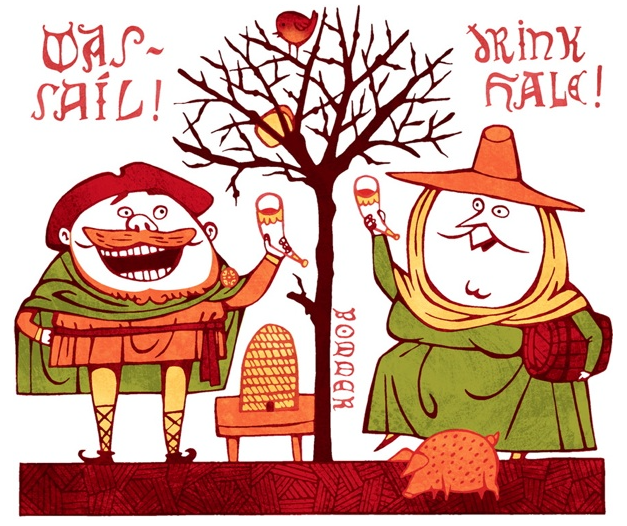
Was hail? Drink hail!

In our modern times, January seems to have become a time for abstinence, like an early Lent. Cutting down, cutting out, giving up. Yet, traditionally, the Christmas celebration reached its climax today, 6th January, Epiphany in the Christian calendar, probably borrowed from some earlier, pre-Christian celebration. Whatever the beliefs, it’s a dark time of the year: almost exactly the middle of winter, everything from the last year has died off and few if any signs of life are poking through. Today, early January signals the time of year when most people feel depressed (back to work after all the festivities and the realisation after a week-long promise of new resolutions, that much will be the same); in latter days, the feeling would have been the same but for more fundamental reasons:  when will growth return? Will we be able to replenish our stocks of food? Will we – and our livestock – survive the harsh winter.

Out of this fear, the pastime of wassailing grew. Nowadays we think of it with cider and apple trees, but more widely (given the relatively restricted growth of apple orchards across the isles), the wassail was a lammas or spiced ale (unhopped beer). I knew an old farmer who strained mulled wine through lambswool – perhaps this filtering process is the source of the word.  Whichever drink was made, apple trees would be blessed; field boundaries would be walked, a drop of two of the mulled drink would be imbibed from large hand-turned bowls.  The cry of ‘Was hail?’ would be ring out; the reply, ‘Drink hail!‘. Hopefully the spirits of the trees and the plants would be involved and renewed growth would follow.

So tonight I won’t abstain.  I’ll get myself off down the pub and maybe, just maybe, sing an old carol not often sung by the choirboys of Kings College these days: the Gloucestershire Wassail:

A-wassail! A-wassail! all over the town,
Our toast it is white and our ale it is brown;
Our bowl it is made of the white maple tree;
With the wassailing bowl we’ll drink unto thee.

Wassail
Source: Spitalfields Life


Low light

Early morning; it feels like I am heading east
But the low, back-lit winter sun scrambles over the horizon behind me
Sending lighthouse beams skimming over the grass
In a tree, slumbering pigeons blink to life
Chunky grey balls; camouflaged Christmas decorations

Dazzling flares of reflected light dazzle, hillbilly headlights
Mounted on ‘roo bars, off the panes of cheap double glazing
Chickens, loose in a field purr to life like an accelerating motorbike
Off in the distance

IMG_2827_2

Red sky

This morning, the warning, from he that tends the sheep
A watery sun, but the flames are not dowsed
It burns and scorches and chars
Yet all around ice, underfoot cracks
And lines the ‘rows with trident barbs, the frost king
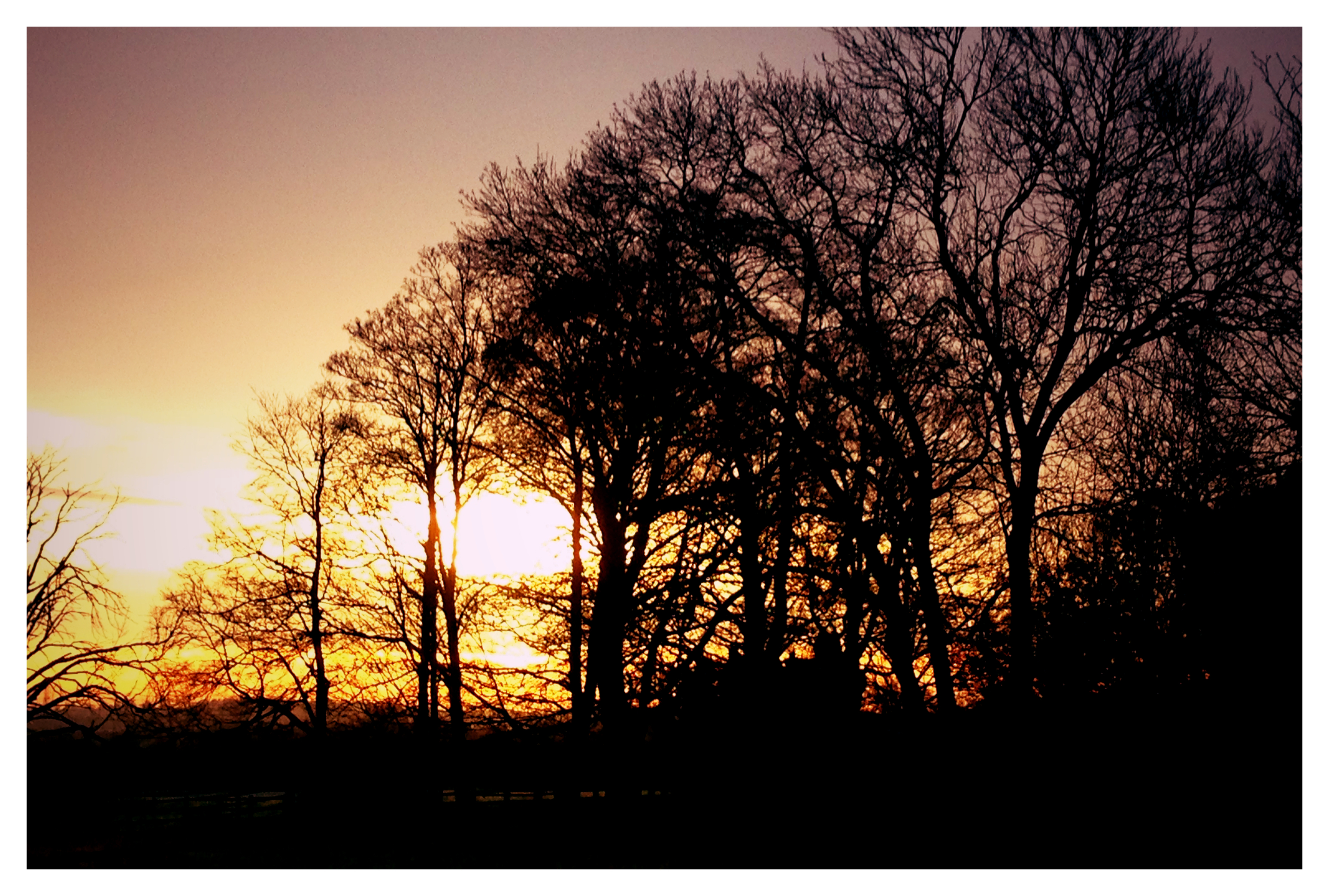
Trees stand sentinel, their branches a candlelit silhouette
Root like, upturned against the bands of orange cloud

IMG_2786_2_fotor